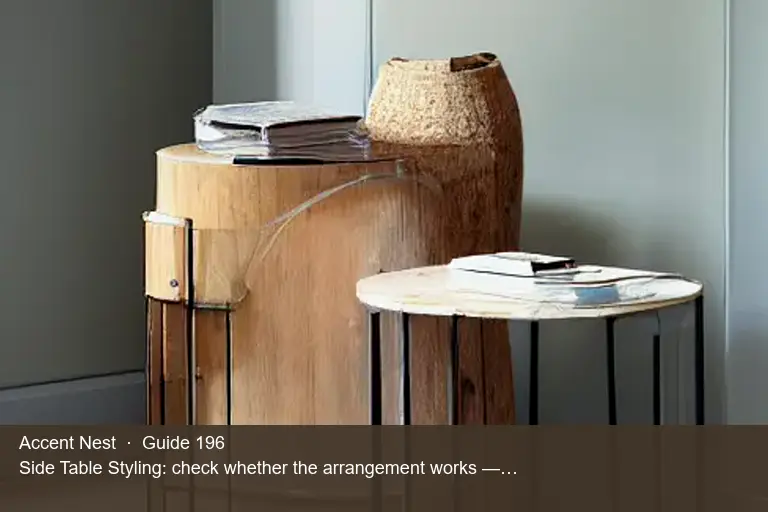
Side Table Styling: check whether the arrangement works — measurement guide for a seasonal rotation; setup in small spaces
Side tables are a versatile and stylish addition to any living space. Whether you're looking to create a cozy, inviting, or functional space, a side table can be the perfect addition. In this guide, we'll explore how to arrange side tables in small spaces, ensuring that your space looks both beautiful and functional. Let's dive in!
Firstly, let's consider the essential elements of a side table arrangement. A side table consists of three essential components: a base, a frame, and a drawer or storage unit. The base should be sturdy enough to support the weight of the other elements while also being able to move freely. The frame is the central component, serving as the main structure and should be proportionate to the size of the space. The drawer or storage unit is the final component, providing additional storage and allowing you to organize your items.
In a small space, the key to arranging side tables is to focus on creating a balanced and harmonious design. This means that the base should be designed to fit the space, and the frame should be designed to support the drawer or storage unit. It's also important to consider the relationship between the base and the frame to ensure that the overall design is balanced and aesthetically pleasing.
Now, let's explore some practical tips for arranging side tables in small spaces. Firstly, consider the placement of the base. The base should be placed at the center of the space, with the frame and drawer or storage unit positioned around the base. This will create a more balanced and harmonious design. Secondly, consider the color scheme. The color scheme of the space and the base should match the overall style of the room. Thirdly, consider the size of the space and the frame. The size of the space and the frame should be proportionate to each other, allowing the base to fit the space. Lastly, consider the layout of the space. The layout of the space should be designed to allow the base and the frame to move freely, creating a more balanced and harmonious design.
In conclusion, arranging side tables in small spaces is not only important for creating a functional and inviting space, but also for creating a beautiful and harmonious design. By following these tips, you can create a balanced and harmonious design that is both beautiful and functional.