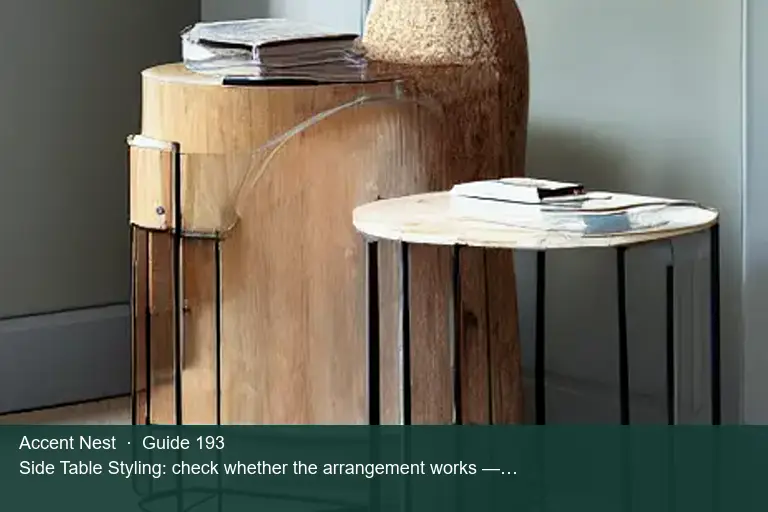
Side Table Styling: check whether the arrangement works — troubleshooting map for incomplete measurements; setup in small spaces
When styling a side table, it's crucial to ensure that the arrangement works well, especially when you're working with incomplete measurements. Here’s how you can troubleshoot and set up a side table in a small space:
### Step 1: Assess the Available Space
- **Measure the Area**: Start by measuring the dimensions of the space around the side table. Consider the height, width, and depth of the area where the side table will be placed. This helps you determine if there's enough room to comfortably fit the table or if adjustments need to be made.
### Step 2: Evaluate the Current Layout
- **Check Existing Furniture**: Look around the room to see what other furniture is present. This will give you an idea of how the space is currently arranged. For instance, if there’s a large piece of furniture blocking part of the space, you might need to rearrange or adjust the layout of the side table.
### Step 3: Determine the Functionality
- **Choose the Right Size**: Decide on the size of the side table that will fit best in the available space. Make sure the table’s height and width are within the comfort zone of the room. If the space is small, a smaller side table might be more appropriate.
### Step 4: Arrange the Arrangement
- **Placement Strategy**: Plan the placement of the side table. If the side table is tall, consider placing it closer to the wall to save space. If it’s wide, position it in the center of the room to create a visual focal point. Ensure that the side table is placed where it can be seen easily, but not obstructed by other furniture.
### Step 5: Consider the Surrounding Furniture
- **Adjustments for Existing Furniture**: If there’s furniture blocking the space, consider rearranging it to open up the area. For example, moving a smaller piece of furniture to the side or behind the side table can make more room for the table.
### Step 6: Troubleshoot Incomplete Measurements
- **Adjustable or Modular**: Look for side tables that are adjustable or modular. These types of tables can be expanded or shortened to fit different spaces. They often have storage compartments or can be customized with different sizes.
### Step 7: Finalize the Setup
- **Check the Fit**: After placing the side table, check that it fits perfectly and there are no gaps or overlaps. If it’s not fitting well, you may need to make minor adjustments.
### Step 8: Enjoy Your Stylish Side Table
- **Use with Confidence**: With the arrangements checked, you can now use your side table with confidence, knowing that it’s positioned in a way that enhances the room’s aesthetics and functionality.
By following these steps, you can troubleshoot and set up a side table in a small space, ensuring that it works well and adds value to your living environment.
Use this guide