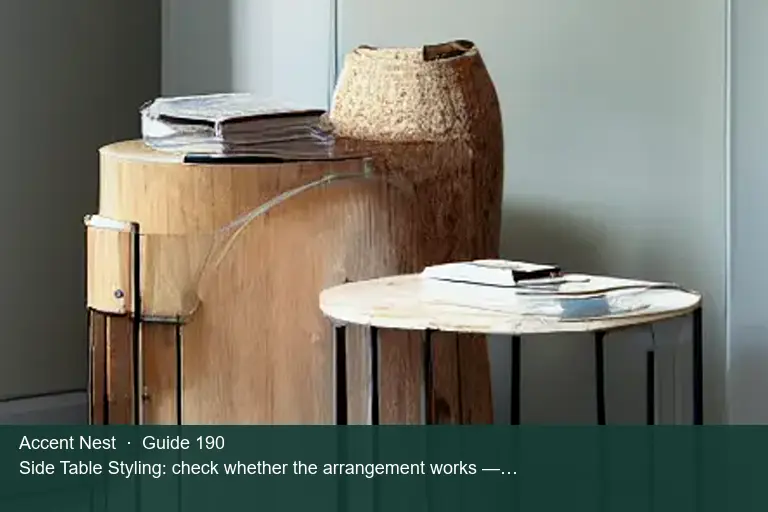
Side Table Styling: check whether the arrangement works — checklist for existing decor; setup in small spaces
Side tables have long been a focal point of home decor, serving not only as a place to display items but also as a focal point for conversation. Whether in a small space or in a large room, side tables can make a difference in the atmosphere and conversation. However, how a side table is arranged can make a big difference in how it fits in with the rest of the room. Here is a checklist for ensuring that a side table is working in a small space.
- **Color and Furniture Alignment:** Ensure the color scheme of the side table is in harmony with the rest of the room. A neutral color like white, beige or soft pastel colors can help to create a soft and inviting atmosphere. But if the room is more color-driven, consider the colors that complement the furniture and the color scheme of the walls. For example, a light blue wall with a beige or soft pastel-colored side table can create a calming and inviting atmosphere.
- **Size and Placement:** The size of the side table is another important factor. A small side table should be proportionate to the space and the furniture around it. For example, a small side table that can be placed in a small corner of a room can add a sense of intimacy and comfort. On the other hand, a side table that is too small can feel cramped and unsuitable for conversation.
- **Lighting:** Light can also play a significant role in the overall atmosphere. A side table with light bulbs or a small table lamp can provide a warm and inviting light. However, if the space is dimmed or the lighting is too harsh, the space can feel cold and uninviting.
- **Storage:** A side table that is not well-stocked can be a hindrance. If the space is small, a side table that is not well-stocked can feel like a cluttered and uninviting place. Make sure that the space is well-stocked and that there is enough space for the items to be displayed comfortably.
- **Color and Furniture Contrast:** If the side table is a color that contrasts with the other furniture in the room, it can add a sense of warmth and comfort. On the other hand, a side table that is too dark or too light can create a sense of coldness or warmth, respectively.
- **Background:** The background of a side table can also play a significant role in the overall atmosphere. If the space is dark, a side table that has a soft background can create a soft and inviting atmosphere. On the other hand, if the space is bright, a side table that has a dark background can create a sense of coolness.
In summary, a side table is a useful piece of furniture that can make a big difference in the atmosphere and conversation. By ensuring that the color and furniture alignment, size, lighting, storage, color and furniture contrast, and background are all in harmony, the side table can create a sense of warmth and comfort. But the placement of the side table in a small space can also make a big difference in how it fits in with the rest of the room.