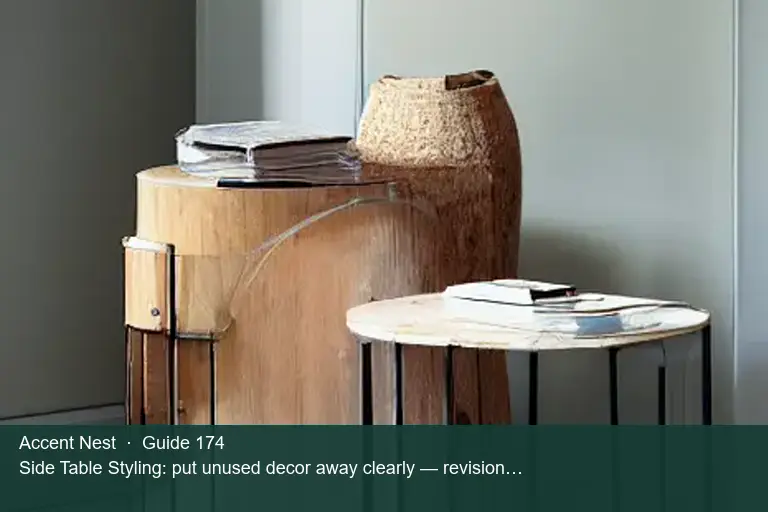
Side Table Styling: put unused decor away clearly — revision plan for incomplete measurements; setup in small spaces
Side tables are a common space-saving accessory that can transform small spaces into elegant and functional pieces of furniture. However, they can also become a focal point when they are not used, leading to clutter and disorganization. In this article, we will explore a revision plan for incomplete measurements to ensure that unused decor remains clear and organized. By using a systematic approach, we can transform side tables into stylish and functional pieces that are easy to use in small spaces.
### Revisions to Incomplete Measurements
To ensure that unused decor remains clear and organized, we need to revise our measurements. We will start by measuring the height of the side table, which is typically 44 inches. We will then measure the width of the table, which is usually 36 inches. We will take into account the dimensions of the table's frame and any accessories that may be added. The revised measurements will allow us to create a more efficient and functional space.
### Setting up in Small Spaces
Now that we have revised our measurements, we can set up in small spaces. We will start by placing the side table in a central position within the small space. We will then orient the table towards the center of the space, ensuring that it is balanced and symmetrical. We will also ensure that the table is positioned in a way that allows us to easily access the accessories that may be added to the table.
### Choosing Accessories
When choosing accessories for the side table, we will consider the size of the table and the accessories that will be added. We will also ensure that the accessories are not too large or too small, as they can clutter the space. We will also consider the style of the accessories and how they will fit within the space.
### Creating a Clear Space
To create a clear space, we will start by placing the accessories at a consistent height. We will then orient the accessories towards the center of the space, ensuring that they are evenly distributed. We will also ensure that the accessories are positioned in a way that allows us to easily access them.
### Putting Unused Decor Away Clearly
To ensure that unused decor remains clear and organized, we will follow the following steps:
- Measure the height of the side table and the width of the table. 2. Measure the dimensions of the table's frame and any accessories that may be added. 3. Revert the measurements to create a more efficient and functional space. 4. Orient the table towards the center of the space. 5. Position the table in a way that allows us to easily access the accessories. 6. Place the accessories at a consistent height. 7. Orient the accessories towards the center of the space.
### Conclusion
By following the steps outlined in this article, we can transform unused decor into stylish and functional side tables that are easy to use in small spaces. By revising the measurements, setting up in small spaces, choosing accessories, creating a clear space, and putting unused decor away clearly, we can ensure that our side tables remain clear and organized, making them a useful and stylish addition to any small space.