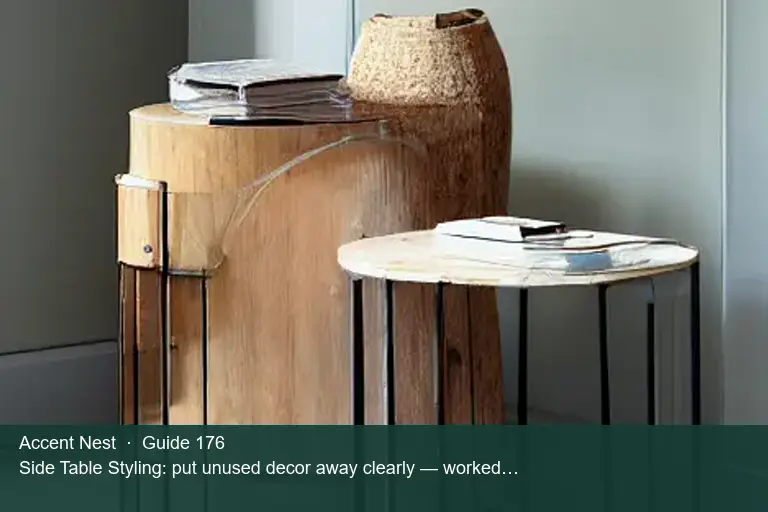
Side Table Styling: put unused decor away clearly — worked example for a seasonal rotation; setup in small spaces
Side tables are often seen as a decorative addition that can add a touch of style and comfort to any room. However, they can also become cluttered and unappealing when they are not used. In this article, we will explore how to put unused decor away clearly for a seasonal rotation in small spaces. We will provide a step-by-step guide on how to select and arrange side tables that are suitable for a seasonal rotation, and how to choose materials that will complement the space and season.
When selecting side tables for a seasonal rotation, it is important to consider the purpose of the table and the season. For example, a table in a garden is likely to be used for entertaining and socializing, while a table in a living room is likely to be used for relaxation and work. By selecting side tables that are suitable for each purpose, you can ensure that they are used in the right setting and not cluttered.
When selecting materials for side tables, it is important to consider the season and the color scheme of the room. For example, a table in a garden will likely be soft and natural, while a table in a living room will likely be bold and contemporary. By selecting materials that complement the room's colors and color scheme, you can ensure that the side tables are not only decorative but also functional.
When arranging side tables, it is important to consider the size and shape of the table. The table should be large enough to accommodate the decor and still be small enough for the space. For example, a large table in a garden might be best suited for a garden table, while a small table in a living room might be better suited for a coffee table. By selecting tables that fit the space and size, you can ensure that the side tables are used in the right setting and not cluttered.
When arranging side tables, it is important to consider the placement of the table. The table should be placed in a way that allows the decor to be easily seen and appreciated. For example, a table in a garden might be best placed in a corner, while a table in a living room might be best placed in a corner or at the center.
In conclusion, putting unused decor away clearly for side table styling can be done by selecting and arranging side tables that are suitable for the season, selecting materials that complement the room's colors and color scheme, and arranging side tables in a way that allows the decor to be easily seen and appreciated. By following these steps, you can ensure that your side tables are used in the right setting and not cluttered.