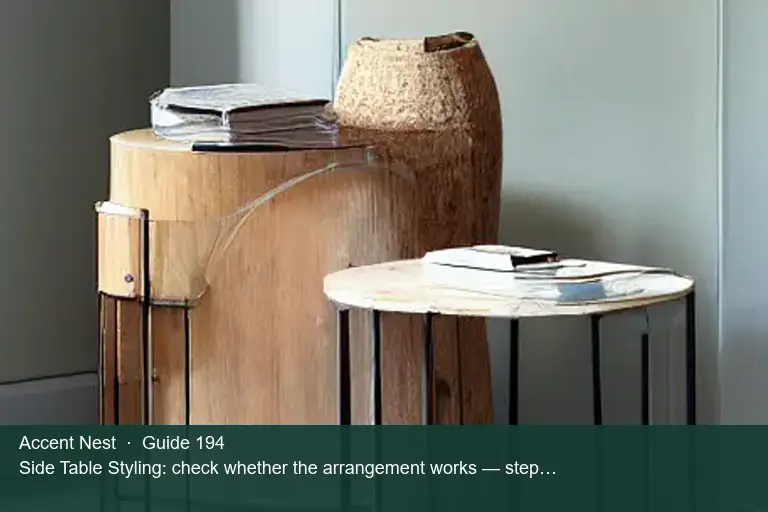
Side Table Styling: check whether the arrangement works — step sequence for incomplete measurements; setup in small spaces
Side tables are often seen as a way to add style to a room, but a side table without a proper arrangement can be a mistake. In this article, we will discuss how to choose a side table, check its placement in small spaces, and how to arrange it to make it work.
First, determine the size of the space you want to occupy. Measure the length and width of the room you want to occupy, and then decide on the ideal length and width for the side table. If the space is small, you might consider a side table with a shorter length and a wider width. However, if the space is large, a side table with a longer length and a smaller width might be more suitable.
Next, choose a side table that complements the room's style. If the room is modern and minimalist, you might consider a side table with a modern and minimalist design. If the room is traditional and historic, you might consider a side table with a classic and traditional design.
In small spaces, it is important to choose a side table that can be easily moved, so that you can adjust it to fit the space. This is especially important if the space is small and you want to change the layout of the room.
Finally, arrange your side table in a small space. If the space is small, you might want to consider using a side table that has a simple and minimal design. If the space is large, you might consider using a side table that has a more complex and functional design.
In small spaces, a side table with a simple and minimal design can be a good choice. A side table with a more complex and functional design can be a good choice if the space is large.
In conclusion, side tables are a great way to add style to a room, but it is important to choose the right side table and arrange it to make it work.