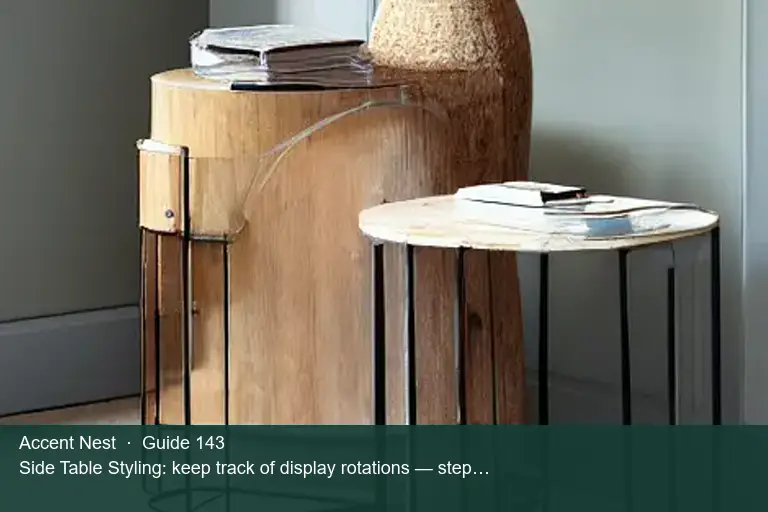
Side Table Styling: keep track of display rotations — step sequence for a narrow display area; setup in small spaces
Side tables are a popular and versatile piece of furniture, but choosing the right one can be a daunting task. In this article, we'll explore a practical task: keeping track of display rotations for side table styling. A narrow display area, such as a small space plan, requires careful consideration. We'll examine step sequences for a narrow display area, setup in small spaces, and provide advice on selecting the right side table.
Step 1: Choose the Right Side Table Before selecting a side table, consider the size of your display area. For a narrow display area, a medium or large size side table will suffice. If your display area is larger than 40 inches, a small side table may be better. The size of the side table you choose should be proportional to the size of your display area.
Step 2: Setup in Small Spaces In small spaces, a side table can be a useful tool for keeping display rotations in check. A small side table, such as a 30-inch or 40-inch side table, can easily fit into small spaces and provide a comfortable viewing position. A small side table can also be used for displaying smaller items, such as magazines or photo albums.
Step 3: Select the Right Side Table When selecting a side table, consider the material, design, and size of the side table. A side table with a sleek, modern design and a small size can be a good choice for a small space plan. A side table with a rustic, wooden finish and a large size can be a good choice for a narrow display area.
Step 4: Display Rotations To keep track of display rotations for side table styling, consider the following steps: 1) Determine the size of your display area; 2) Choose a side table with a medium or large size; 3) Set up in small spaces; 4) Select a side table with a sleek, modern design and a small size; 5) Display smaller items; 6) Keep display rotations in check.
Step 5: Display Rotations To keep track of display rotations for side table styling, consider the following steps: 1) Determine the size of your display area; 2) Choose a side table with a medium or large size; 3) Set up in small spaces; 4) Select a side table with a sleek, modern design and a small size; 5) Display smaller items; 6) Keep display rotations in check.
Conclusion In conclusion, side tables are a versatile and useful piece of furniture, but choosing the right one can be a daunting task. In this article, we've explored a practical task: keeping track of display rotations for side table styling. We've examined step sequences for a narrow display area, setup in small spaces, and provided advice on selecting the right side table.