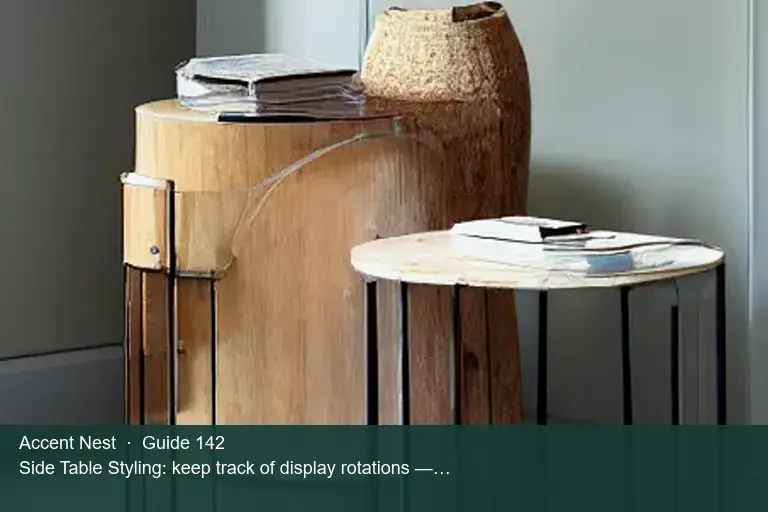
Side Table Styling: keep track of display rotations — comparison table for a first display plan; setup in small spaces
**Side Table Styling: Keep Track of Display Rotations**
In the world of side tables, displaying items efficiently is crucial for maximizing space usage and overall comfort. For those in small spaces, managing display rotations can be a challenge, but with the right approach, it's possible to keep your displays organized and aesthetically pleasing.
**First Display Plan: Small-Space Plans**
Small spaces, whether it's a bedroom or a living room, often require a first display plan to ensure that your items are easily accessible and well-organized. Here’s a practical guide to help you keep track of display rotations in a small space.
**1. Determine Your Display Needs**
Before you start, make sure you understand what items you need to display. In a small space, the most important considerations are space, visibility, and the placement of items. Think about how many items you'll need to display in a short period of time.
**2. Choose a Suitable Side Table**
Select a side table that fits well within the space you have. It's essential to choose a table that is not too large or too small, as these can affect how easily you can move items around. Consider the size of your items and whether the table will be adjustable to accommodate them.
**3. Consider Your Layout**
Use the space you have wisely. Consider how you want to position your items and how they will be displayed. A common layout for small spaces is to stack items on top of each other, with the top item at the front of the table. This arrangement can make it easier to move items around and keep them visible.
**4. Use a First Display Plan**
A first display plan is a way to ensure that your items are always in sight. This plan can be a simple table or a stackable layout. Use the space you have wisely to create a plan that works for your needs.
**5. Keep Items Organized**
While you may not have many items, keep items organized to ensure that they are easily accessible. Use clear labels, such as the item name or the category it belongs to, to make it easier to find what you need.
**6. Consider Your Environment**
Keep in mind the environment you'll be displaying in. In a small space, the most important is to make it comfortable and easy to navigate. Consider how you will be displaying your items, and how you will be moving them around.
**7. Test Your First Display Plan**
Before you go into your first display plan, it’s important to test it. Test the plan by placing items on the first display plan and see how easily you can move them around. Adjust the plan as necessary to make sure it works for your needs.
**8. Maintain Your First Display Plan**
Keep your first display plan organized and in good condition. Clean the table regularly to keep it looking its best.
**Conclusion**
In a small space, keep track of display rotations by using a first display plan. This plan can be a simple table or a stackable layout, and it can make it easier to keep items organized and accessible. By following these steps, you can keep your small spaces well-organized and comfortable for your needs.