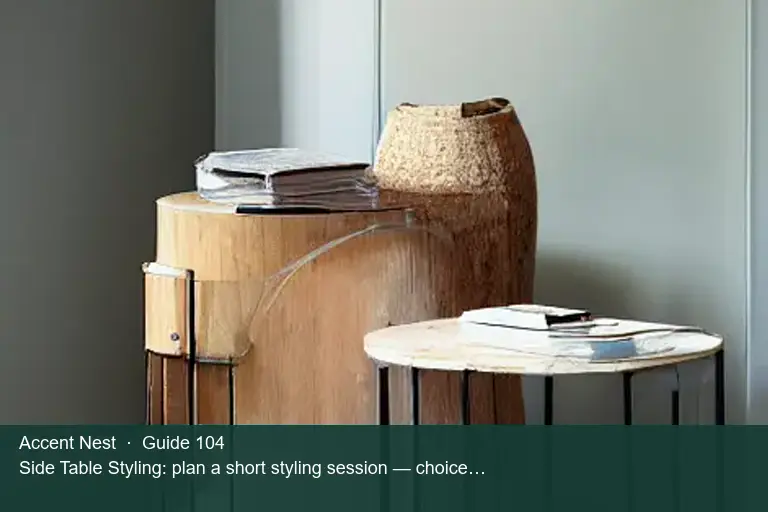
Side Table Styling: plan a short styling session — choice rubric for a narrow display area; setup in small spaces
Side tables have long been a staple in homes, workplaces, and even restaurants, where they have been used to display items like coffee, food, and drinks. As individuals age, the need to refresh our living spaces becomes increasingly important. One of the best ways to enhance the aesthetic appeal of a side table is by selecting the right type and size. In this article, we will explore the various options available to us when selecting a side table for a narrow display area. We will also discuss the importance of planning a short styling session in small spaces. Finally, we will provide a rubric for a narrow display area, with a focus on selecting the right type and size of a side table.
First, let's consider the different types of side tables available. There are several types of side tables, including single table, double table, and multi-table. Each type has its own unique features and design elements. Single table side tables are great for displaying small items like coffee or food, while double table side tables are ideal for displaying larger items like meals or drinks. Multi-table side tables offer a wider display area, making them perfect for displaying a variety of items.
Next, let's consider the size of the side table. The size of the side table is crucial when selecting it for a narrow display area. A small side table should not only be able to accommodate a few items but also allow for easy access to other items. A small double table side table, for instance, can be easily stacked and arranged to fit in a small space. On the other hand, a small single table side table may not be able to accommodate a large number of items, making it less suitable for a narrow display area.
Now, let's look at the importance of planning a short styling session in small spaces. A narrow display area can be challenging to manage, especially when it comes to selecting a side table. By planning a short styling session, we can ensure that our display area is not only aesthetically pleasing but also functional. This can be achieved by selecting a side table that is appropriate for the size of the display area and that can easily fit into a small space.
Finally, let's discuss a rubric for a narrow display area. The rubric for a narrow display area should include a mix of size, material, and design elements. The size of the side table should be a key consideration when selecting it, as it should not only be able to accommodate a few items but also allow for easy access to other items. The material of the side table should be chosen based on the desired aesthetic and functional features. The design of the side table should be chosen based on the desired aesthetic and functional features.
In conclusion, side tables can be a great addition to any room, but the right type and size can make a significant difference in the aesthetic appeal of a display area. By selecting the right type and size of a side table, we can ensure that our display area is both functional and aesthetically pleasing. The importance of planning a short styling session in small spaces and the use of a rubric for a narrow display area can help us achieve a great display area that is both functional and aesthetically pleasing.