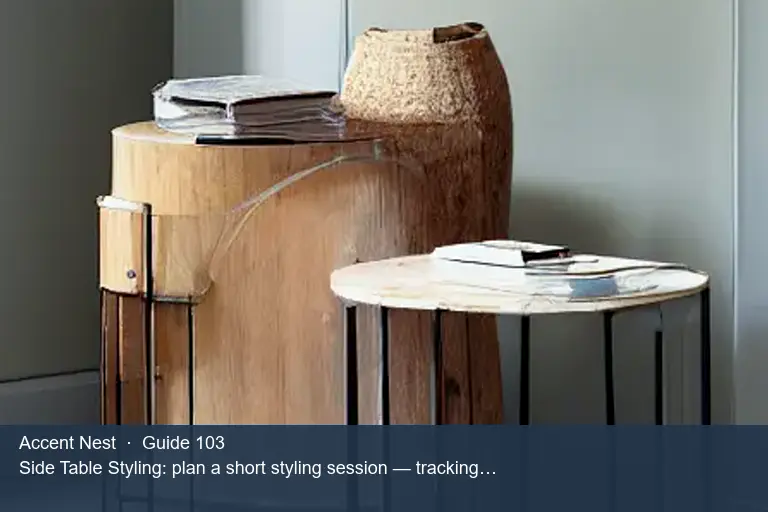
Side Table Styling: plan a short styling session — tracking sheet for a narrow display area; setup in small spaces
Side tables are essential pieces of furniture that not only serve as functional storage but also enhance the aesthetic appeal of any living space. In the context of a narrow display area, the right side table can transform a room into a visually appealing and functional space. This article will guide you through the process of choosing the right side table for your narrow display area, including the setup in small spaces.
### Step 1: Assess Your Display Area Before you start planning, it's crucial to assess the space you're working with. Look at your walls, the ceiling, and any other furniture you have in the room. Identify the focal point and how you want the display area to look. This will help you narrow down your options.
### Step 2: Determine the Purpose of the Side Table Think about what you want to achieve with the side table. Is it for display purposes, as a statement piece, or as a focal point? Consider the purpose and the space you want to fill. For example, if you're looking to display a painting, a display table might be a good choice. If you're looking to highlight a piece of art, a side table could be a great addition.
### Step 3: Choose the Right Side Table Based on your assessment and the purpose of the side table, select the right side table. Consider the style, material, and size. For example, a side table with a rustic, wooden finish might be better suited for a display area than a sleek, modern one. A side table with a curved shape might be more suitable for a display area than a straight, rectangular one.
### Step 4: Set Up in Small Spaces Once you've chosen the right side table, it's time to set it up in a small space. This could be a bedroom, a study, or a living room. Ensure the side table is level and positioned in a way that allows you to display items in a balanced and organized manner. This might mean positioning the side table at the end of a long table or at the corner of a room.
### Step 5: Use the Right Tools To finish your side table styling session, use the right tools. For example, a pair of scissors can be used to cut the side table, a ruler to measure the dimensions, and a glue stick to attach the side table to the wall. Ensure you have all the necessary tools and materials to make your project a success.
### Step 6: Congratulations Once your side table is set up, congratulations on your project! Your side table is now ready to transform your narrow display area into a functional and stylish space. Remember, the key is to think about your space, your purpose, and your style. With the right tools and materials, you can create a side table that enhances your living space and makes it a more visually appealing and functional place to be.
### Conclusion In conclusion, a side table is a versatile piece of furniture that can transform any small display area into a visually appealing and functional space. By following the steps outlined in this article, you can choose the right side table, set it up in a small space, and use the right tools to create a side table that will enhance your living space and make it a more stylish and functional place to be.