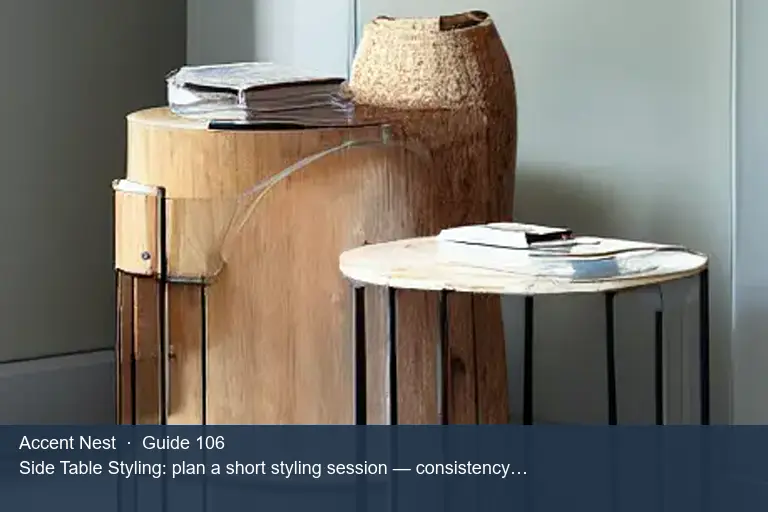
Side Table Styling: plan a short styling session — consistency test for a shared room; setup in small spaces
In today's busy world, side tables have become a staple in every home. As the go-to station for storing and displaying items, side tables can make a significant impact on the aesthetics and functionality of a room. However, with so many options available, choosing the right side table can be a daunting task. In this article, we'll explore practical, step-by-step plans for creating a short styling session for side tables. The goal is to create a cohesive, functional, and stylish space in a small space. Let's start with an overview of the key elements of a side table.
A side table is a functional and decorative piece of furniture that can be used to display items, hold objects, and provide storage space. Depending on the size and style of the room, a side table can be either a single piece or a group of pieces. Some popular options include single table legs, three-legged tables, and group tables. The choice of side table will depend on the decor style of the room and the items you want to display.
When selecting the right side table, it's important to consider the space and the items you want to display. A small space is best suited for a single piece of furniture, while a larger space may benefit from a group of side tables. The items you want to display should also be carefully chosen, as they will have a significant impact on the overall look and feel of your room.
Now, let's explore practical, step-by-step plans for creating a short styling session for side tables. The first step is to decide on the color scheme of the space and the items you want to display. The color scheme can be determined by the decor style of the room, the items you want to display, and your personal tastes. Once you've decided on the color scheme, the next step is to select the side table. The color of the side table will depend on the color scheme of the space, the items you want to display, and your personal taste. The side table will also need to be chosen based on its size and style.
In the next step, the side table needs to be placed in the space. The placement of the side table is important, as it will affect the overall look and feel of the space. The side table should be placed in a way that enhances the decor style of the room, the items you want to display, and your personal taste. The side table should also be placed in a way that is easy to access and use, as it will be used frequently.
Finally, the side table needs to be maintained. Once the side table is in the space, it's important to maintain it regularly. This includes cleaning the table, adding a new set of objects, and updating the decor style of the room. By maintaining the side table, it will continue to serve as a functional and decorative piece of furniture, enhancing the overall look and feel of the space.
In conclusion, side tables can make a significant impact on the aesthetics and functionality of a room. By following practical, step-by-step plans for creating a short styling session for side tables, you can create a cohesive, functional, and stylish space in a small space. Remember to consider the space, items, and your personal taste when selecting the right side table.