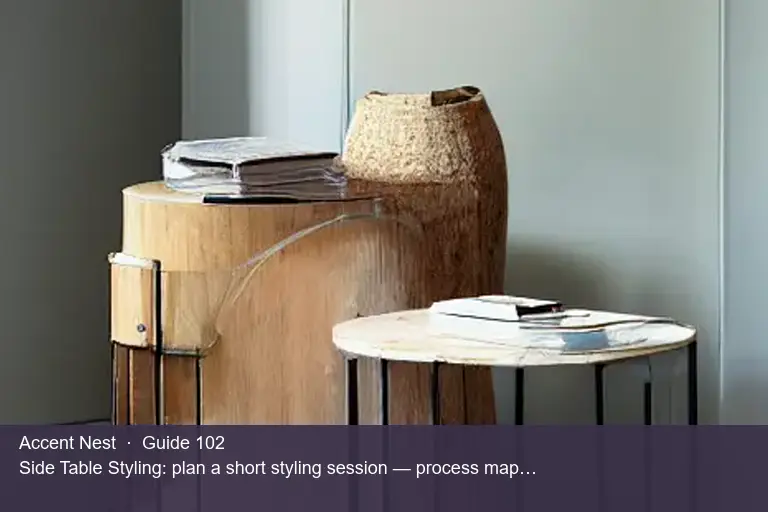
Side Table Styling: plan a short styling session — process map for a first display plan; setup in small spaces
Title: Side Table Styling: Plan a Short Styling Session
Side tables are essential pieces of furniture in any home, as they serve as a focal point and a transitional space between the living space and the bedroom. However, they can also be a source of clutter and visual overload. This article is designed to help you plan a short styling session for side table styling, making the process simpler and more effective.
Step 1: Define Your Goals
Before you start planning, it's important to define your goals. What do you want to achieve with your side table? Are you looking to create a new look, add more color, or simply improve the aesthetics of your living space? Having a clear goal will help you focus your styling session and ensure that your plan is tailored to your needs.
Step 2: Select Your Materials
Choosing the right materials for your side table can make a big difference in its appearance. Consider using a variety of materials such as wood, metal, glass or even foam, depending on your budget and desired aesthetic. It's also helpful to have a mix of sizes so you can choose the right size for different spaces in your home.
Step 3: Plan Your Layout
The layout of your side table is crucial in creating a cohesive look. Consider how you want to use it in your home and think about how you want to frame it. Are you planning to use it as a focal point, a transitional space, or a wall hanging? Having a clear layout will help you plan your side table more effectively.
Step 4: Create Your Plan
Based on your goals, materials, and layout, create a plan for your side table. Use a plan that is easy to read and follow, with clear sections for each phase of your project. This will help you stay organized and ensure that your plan is completed on time.
Step 5: Start Your Styling Session
Now that your plan is ready, it's time to start your styling session. Use a tool such as a computer or smartphone to create your plan on the go. You can also use a planner or a digital calendar to keep track of your progress and make adjustments as needed.
Step 6: Set Up Your Space
Once you have your plan in place, it's time to set up your space. Consider how you want to use the side table in your home and think about how you want to frame it. Having a clear space in your home will help you plan your side table more effectively.
Step 7: Review and Adjust
After your styling session, it's important to review and adjust your plan. Make sure that your plan is detailed and that you are using your materials effectively. Adjust your layout and materials if necessary, and repeat the process until you are satisfied with the results.
In conclusion, planning a short styling session for side table styling can be a breeze with the right tools and a clear plan. With a focus on your goals, materials, layout, and space, and a clear plan, you can create a cohesive look in your home that enhances the aesthetics of your space.