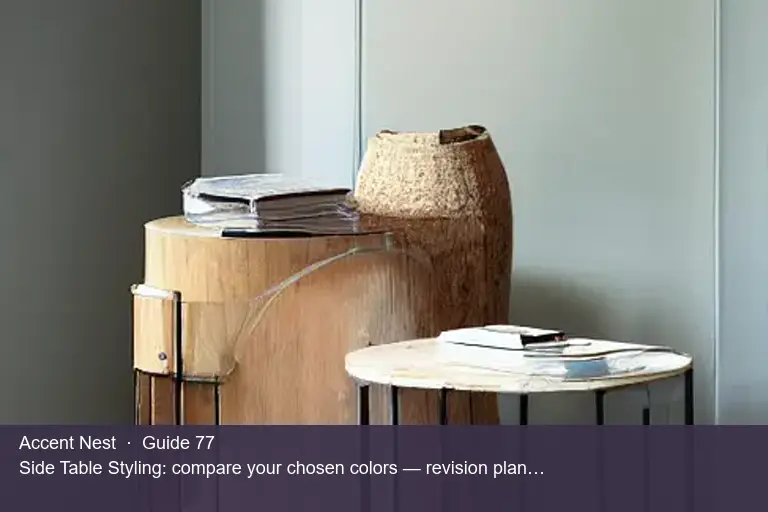
Side Table Styling: compare your chosen colors — revision plan for a temporary arrangement; setup in small spaces
In the world of side tables, choosing the right colors for a temporary arrangement can be a delightful way to add some flair and a touch of personal style to your space. Whether you’re looking to match your furniture’s style, add a unique twist to your collection, or simply want to create a cohesive look for a short period, here’s a practical guide to help you compare your chosen colors and come up with a revision plan for a temporary arrangement.
First, let’s establish why side tables are a perfect choice for a temporary arrangement. Side tables are versatile and functional furniture that can be used for a variety of purposes, from display cases to storage units. This makes them ideal for temporary spaces where you want to add some additional elements that can be easily removed or moved for a quick turnaround.
Once you’ve decided on the colors of your side tables, it’s time to compare them. The key is to start with the primary colors and work your way down to the secondary ones. This helps ensure that your chosen colors complement each other and create a cohesive look.
Here’s a step-by-step plan to help you compare your chosen colors for side table styling:
Step 1: Identify the primary colors Start by identifying the primary colors of your side tables. These are the colors that are most prominent and will be the foundation of your temporary arrangement. You can use tools like a color wheel or online tools like Canva to help you identify the primary colors of your side tables. Once you’ve identified the primary colors, you can start to compare them.
Step 2: Identify secondary colors Next, identify the secondary colors of your side tables. These are the colors that are less prominent and can be used to add some depth and interest to your temporary arrangement. You can use the same tools mentioned in Step 1 or online tools like Canva to help you identify the secondary colors of your side tables. Once you’ve identified the secondary colors, you can start to compare them.
Step 3: Compare the primary and secondary colors Now that you have identified the primary and secondary colors of your side tables, it’s time to compare them. Start by selecting a single color from the list of primary colors and comparing it with the secondary colors. This will give you an idea of how the colors complement each other. Then, move on to a different color from the list of primary colors and compare it with the secondary colors. This will give you another idea of how the colors complement each other.
Step 4: Choose your final color Based on your comparison, you can choose your final color. This is the color that will be the focus of your temporary arrangement. You can use your color selection tool to choose your final color. Be sure to use your color selection tool to make a final decision, as it can be difficult to select the right color when you are not sure.
Step 5: Revise your plan Finally, let’s revise your plan based on your final color. Your temporary arrangement is about to take shape, and it’s time to make a decision on how to incorporate your chosen color. You can use your color selection tool to make a decision on how to incorporate your chosen color. Be sure to consider the style and aesthetics of your temporary arrangement, and make a decision that will make your temporary arrangement unique and memorable.
By following this step-by-step plan, you can help you compare your chosen colors for side table styling and come up with a revision plan for a temporary arrangement. Remember to start with the primary colors and work your way down to the secondary ones, compare them, and choose your final color. By following this plan, you can help you create a cohesive look for your temporary arrangement and add some unique twists to your space.