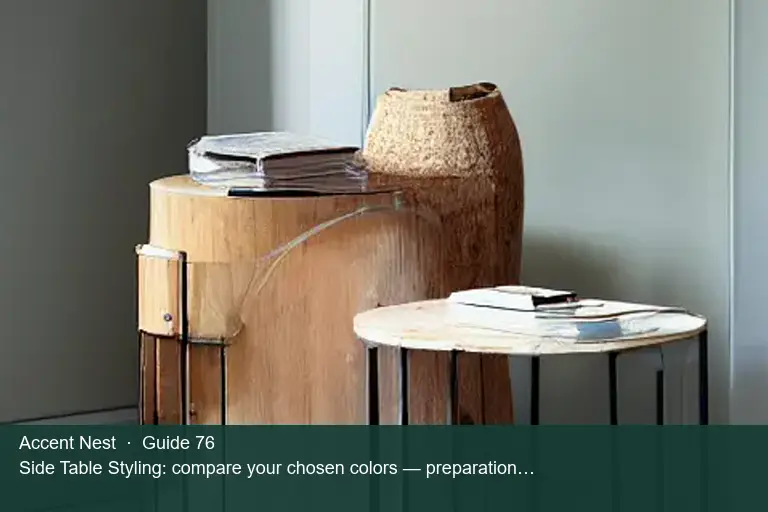
Side Table Styling: compare your chosen colors — preparation guide for a seasonal rotation; setup in small spaces
Side tables are a versatile piece of furniture that can be used in different sizes and settings, making them an ideal addition to any home. However, choosing the right color scheme for your side table can make a significant difference in its appearance and functionality. This guide will help you compare your chosen colors for a seasonal rotation, providing you with a practical, useful, and step-by-step process to ensure your side table looks your best in small spaces.
- Understanding the color palette: A good way to start is to understand your existing color palette. This will give you a basis for comparison with any new colors you choose. Use your existing colors and select a few from the palette you are going to use. The color palette should include shades of the main colors in your existing selection, as well as a few contrasting colors that can help differentiate your side table from other pieces in the same space. For example, if you are going with a navy blue and white color palette, you can include shades of navy blue and white in your selection.
- Color matching: Once you have a good understanding of your existing colors and a few contrasting colors, the next step is to match your colors. This involves selecting a few colors from your existing palette that will work well together with your chosen colors. For example, if you are using navy blue and white colors, you can select a few shades of navy blue and white that will work well with a white background. This will give your side table a cohesive look that can help make it stand out in your space.
- Setting in small spaces: When setting in small spaces, it's important to consider the size and space available. This will help you choose colors that can be used in different sizes and settings without overcrowding your space. For example, if you are setting in a small living room, you can use a few shades of navy blue and white in a small space. This will give your side table a small space feel that can help create a cohesive look.
- Final touches: Finally, you can add some finishing touches to your side table. This can include adding some decorative elements like a few decorative pieces, a few cushions, or a few other pieces to create a cohesive look. For example, you can add a few decorative pieces like a few pillows, a few cushions, or a few other pieces to create a cohesive look.
In conclusion, side tables can be used in different sizes and settings, making them an ideal addition to any home. By comparing your existing colors and a few contrasting colors, you can ensure that your side table looks your best in a small space.
Use this guide