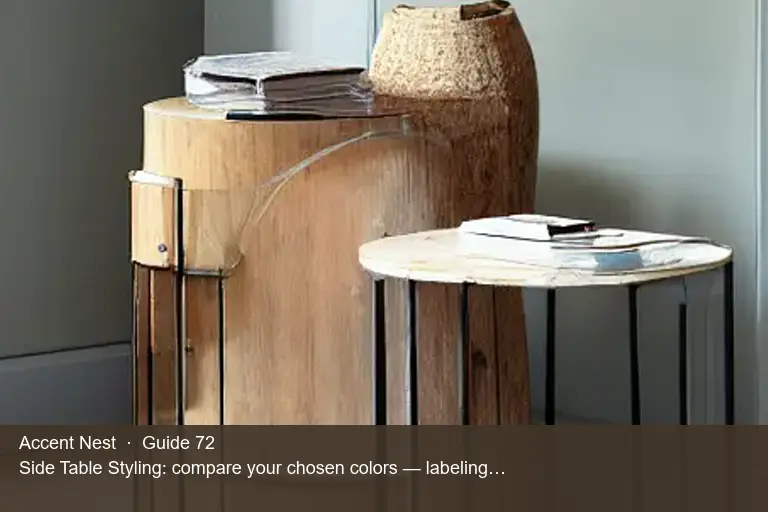
Side Table Styling: compare your chosen colors — labeling scheme for mixed item sizes; setup in small spaces
Side tables are a classic piece of furniture, with the ability to transform into a versatile and functional space, from a casual office setup to a cozy living room. When it comes to side tables, the colors and labeling schemes can significantly impact the overall look and feel of the space. Here’s how to compare your chosen colors for a mix of item sizes, ensuring your new side tables are both stylish and functional.
### Comparing Colors for Mixed Item Sizes
When you’re looking to switch up your side table’s color scheme, the most effective way to do so is by choosing colors that complement each other without overpowering each other. Consider the following rules to help you choose the best colors for your mixed item sizes:
- **Color Contrast**: Use contrasting colors to create visual interest. For example, use a light blue for the top of a side table and a dark green for the bottom, or a light yellow for the top and a dark brown for the bottom. The contrast in colors can make your table stand out and draw attention to your design.
- **Color Harmony**: Choose colors that are harmonious with each other. For instance, mix a light blue with a dark green or a light yellow with a dark brown. This will create a balanced and cohesive look.
### Choosing the Right Colors for Small-Space Plans
When it comes to small spaces, the best colors for a mixed item size can depend on the lighting and the furniture. Consider the following tips to help you choose the right colors for your small space:
- **Lighting**: Light and bright colors are ideal for small spaces, as they create a more airy and open feel. Consider using a neutral color like white, light gray or beige for a warm, inviting look. This will help create a sense of space and make the space feel larger.
- **Furniture**: Small spaces often have limited space and furniture. Consider using furniture colors that complement each other, like matching furniture in a light blue with a dark gray. This will make the space feel larger and more open.
### Tips for Styling a Side Table
Once you have chosen the best colors for your mixed item size, it’s time to start styling your side table. Here are some tips to help you create a cohesive, stylish look:
- **Labeling Scheme**: Labeling scheme can be a visual element that enhances the overall look of your side table. Consider using a label in a contrasting color to create a visually appealing design. Alternatively, you can use a label in a neutral color and add some text or a statement design to highlight your design.
- **Color Scheme**: Use a cohesive color scheme that complements each other. Consider using a color scheme that includes a light blue for the top and a dark green for the bottom, or a light yellow for the top and a dark brown for the bottom. This will create a balanced and cohesive look.
### Conclusion
When it comes to side tables, the colors and labeling schemes can be a powerful tool to enhance the overall look and feel of the space. By choosing colors that complement each other and using a labeling scheme that highlights your design, you can create a stylish and functional side table that fits your small space.