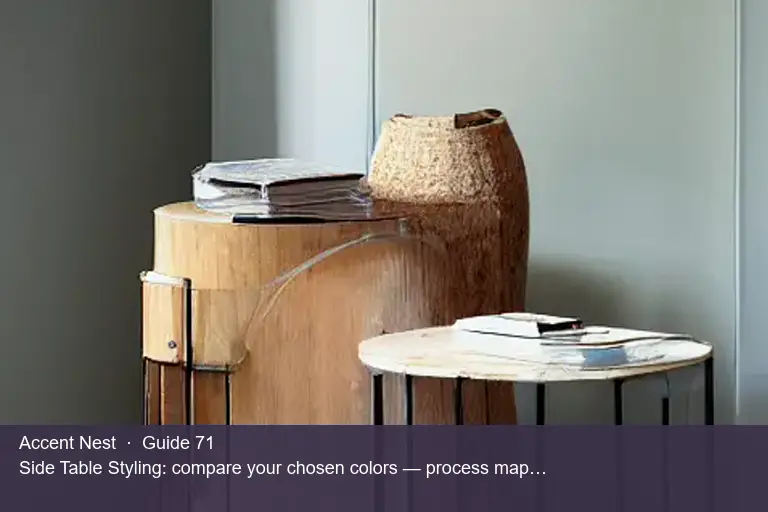
Side Table Styling: compare your chosen colors — process map for mixed item sizes; setup in small spaces
**Side Table Styling: A Guide for Mixed Item Sizes**
As you navigate through the world of side tables, the choice of colors can significantly influence the overall aesthetic and functionality of your space. In small spaces, selecting a side table that complements your interior design is crucial. This article delves into the process of selecting colors for side tables, focusing on mixed item sizes, and provides a step-by-step guide to help you compare your choices and make informed decisions.
**1. Understanding Mixed Item Sizes**
Mixed item sizes, also known as "mixed items," are typically found in small spaces where space is limited. These items often include a variety of colors, textures, and sizes to create a cohesive look without overwhelming the space. For example, a small kitchen might feature a combination of light blue and white, with a medium size table in a medium size palette.
**2. Selecting Colors for Mixed Item Sizes**
When selecting colors for mixed item sizes, it's essential to consider the context of the space and the desired tone. Here’s how to choose colors for small spaces:
- **Light Blue and White:** Light blue and white are timeless and versatile, making them ideal for small spaces. These colors can enhance the appearance of the table by creating a soft, calming tone. For small kitchens, consider a medium size table in a light blue and white palette.
- **Medium Size Table in a Medium Size Palette:** If you prefer a medium size table in a medium size palette, you can still achieve a balanced look. Choose a medium size table in a medium size color and a medium size palette. This approach allows you to maintain a cohesive look without the overwhelming influence of large items.
**3. Creating a Mix of Colors**
When creating a mix of colors for small spaces, consider the purpose of the space and the desired look. Here’s how to create a mix of colors for small spaces:
- **Primary Colors:** Start by choosing a primary color that will dominate the space. This could be a light blue or white. Choose a color that will bring a sense of calm and serenity to the area. For small kitchens, consider a light blue and white table.
- **Secondary Colors:** Next, choose secondary colors that complement the primary color. These secondary colors can add depth and texture to the table. For small kitchens, consider a medium size table in a medium size color and a medium size palette.
**4. Applying the Process Map**
To apply the process map, follow these steps:
- **Step 1:** Determine the purpose of the space. What is the intended look and feel of the space? This will guide your selection of colors.
- **Step 2:** Choose a primary color. This will dominate the space. For small kitchens, consider a light blue and white table.
- **Step 3:** Choose secondary colors. These will complement the primary color and add depth and texture to the table.
- **Step 4:** Apply the mix of colors. Use a mix of colors to create a cohesive look. This approach allows you to maintain a balanced look without the overwhelming influence of large items.
**5. Conclusion**
In conclusion, when selecting colors for mixed item sizes, consider the context of the space, the desired tone, and the purpose of the space. By following the process map, you can create a mix of colors that complements the space and enhances the overall aesthetic of your small kitchen.