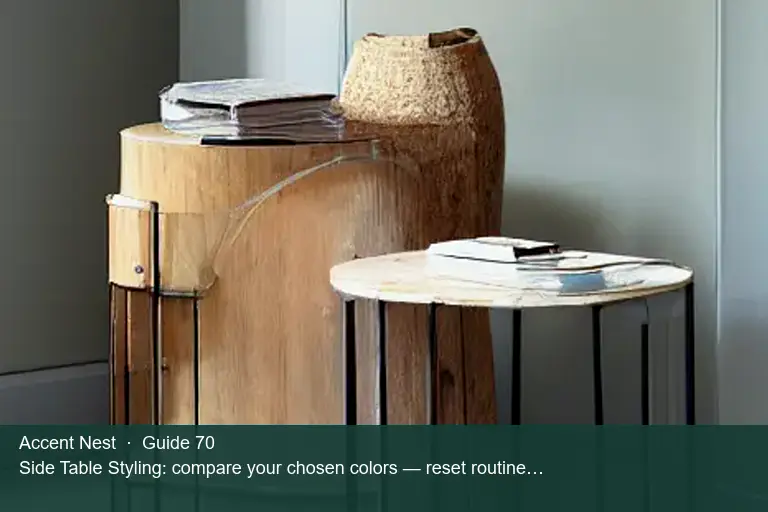
Side Table Styling: compare your chosen colors — reset routine for existing decor; setup in small spaces
In a world where space is the most scarce commodity, side tables have become an integral part of our daily routines. Whether in small spaces or large spaces, choosing the right color for a side table can significantly enhance its appeal and functionality. However, choosing the right color for your side table is not an easy task, as it can be a matter of personal preference, budget, and style. In this article, we will guide you through the process of selecting the right color for a side table, as well as why it’s important to reset your decor for existing space.
Firstly, it’s essential to understand the difference between color and hue. Color is a physical property that is perceived by the human eye and is usually described in terms of a single color, such as red, yellow, blue, or green. Hue, on the other hand, refers to the perceived warmth or coolness of the color. For example, a warm color like red can be perceived as more inviting and warm, while a cool color like blue can be perceived as more inviting and cool. It’s important to consider both of these when selecting the right color for your side table.
When it comes to side tables, the colors you choose will not only affect the overall look of your space, but also the feel and ambiance. Consider the colors that are already in your existing decor. If they are already in your living room, bedroom, or dining area, you may want to choose a color that complements or contrasts with these areas. For example, if you have a living room that is already in a warm color like red, you might want to choose a side table in a cool color like blue or green. This will create a harmonious and inviting space.
Another important factor to consider is the style of your existing decor. If it is a more modern or minimalist style, it may be more appropriate to choose a color that is more neutral, such as white or beige, for your side table. If it is a more traditional or rustic style, it may be more appropriate to choose a color that is more earthy, such as earthy tones like brown or beige, for your side table.
When it comes to side tables, the colors you choose can also affect the functionality of your space. For example, if your side table is a simple or minimalistic design, you may want to choose a color that complements the existing decor or is more suited to your style. For example, if you have a traditional or rustic style, a simple or minimalistic design may be more appropriate, such as a black or beige, while a more contemporary or modern style may be more appropriate, such as a brighter color like yellow or red.
In conclusion, side tables are an essential part of our daily routines and the colors you choose for your side table can significantly enhance its appeal and functionality. It is essential to consider both of these when selecting the right color for your side table. Consider the colors that are already in your existing decor, the style of your existing decor, and the function of your side table. With the right color, you can create a harmonious and inviting space that complements your style and enhances your living or dining area.