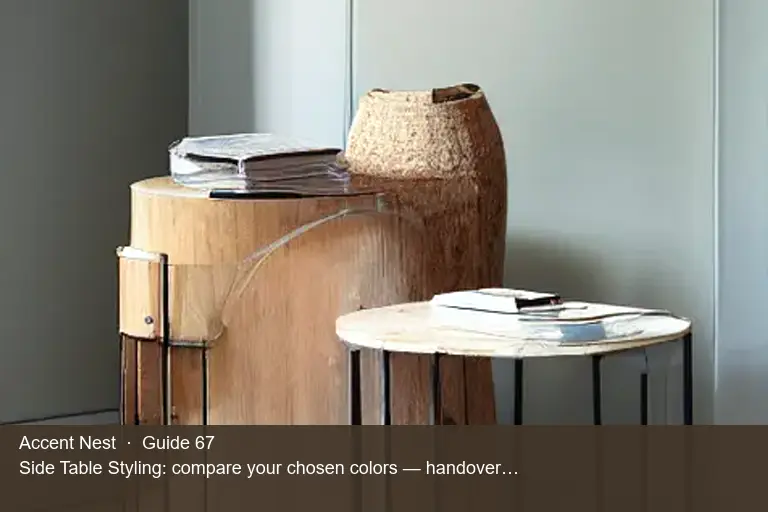
Side Table Styling: compare your chosen colors — handover notes for a short styling session; setup in small spaces
When crafting a side table, choosing the right colors can significantly enhance its aesthetic appeal and functionality. For small spaces, the right color choice can make a big difference in the overall look and feel. This article will guide you through the process of selecting the best side table colors, including the handover notes to help you achieve your desired look and style.
### 1. Choosing the Right Side Table Colors
When selecting side table colors, consider your space and the purpose of the table. For example, a dining table in a large room might need a more vibrant and eye-catching design, while a storage table in a small bedroom might benefit from a softer palette. The key is to strike a balance that complements both the space and the purpose of the table.
#### 1.1. Start with a Base Color
For a general purpose, a neutral color like white or beige is ideal. This is because it allows the table to look uniform and functional without being too overwhelming.
#### 1.2. Consider the Purpose
For a dining table, a light, off-white or cream color would work well. It’s easy to see the table from a distance, making it a great choice for a large dining room.
#### 1.3. Add a Statement Color
For a special occasion or a table with a unique design, adding a statement color can make a big impact. This could be a light pink, a bright yellow or a bold black. These colors can add a touch of personality and uniqueness to the table.
#### 1.4. Consider the Space
For a small space, the right color choice can make a big difference. A dark, muted color like dark blue or dark green is ideal. These colors can create a sense of depth and space within the small table.
### 2. Handover Notes for a Short Styling Session
In a short styling session, it’s essential to provide a handover note to help you achieve your desired look and style. Here are some tips for writing a good handover note:
#### 2.1. Start with a Visual Reminder
Start with a visual reminder of the table and the color choices. This can help you visualize the look and feel of the table and the colors you’ve chosen.
#### 2.2. Discuss the Color Choices
Discuss the color choices with your partner and make sure you both agree on the colors. Make sure the colors you choose complement each other and work together to create a cohesive look.
#### 2.3. Discuss the Purpose
Discuss the purpose of the table and the colors you’ve chosen. Make sure you both agree on the purpose and that the colors you chose are suitable for the purpose.
#### 2.4. Add a Personal Touch
Add a personal touch to your handover note. You can add a personal message or a quote from a favorite book, movie or artist to add a personal touch to your handover note.
### 3. Conclusion
In conclusion, choosing the right side table colors is a crucial step in creating a successful and functional table. By starting with a base color, considering the purpose of the table, adding a statement color, and discussing the colors with your partner, you can create a table that complements both the space and the purpose of the table. Remember to add a personal touch to your handover note to make it more memorable and meaningful.
In the next article, we will explore the next step in creating a side table, the installation process.