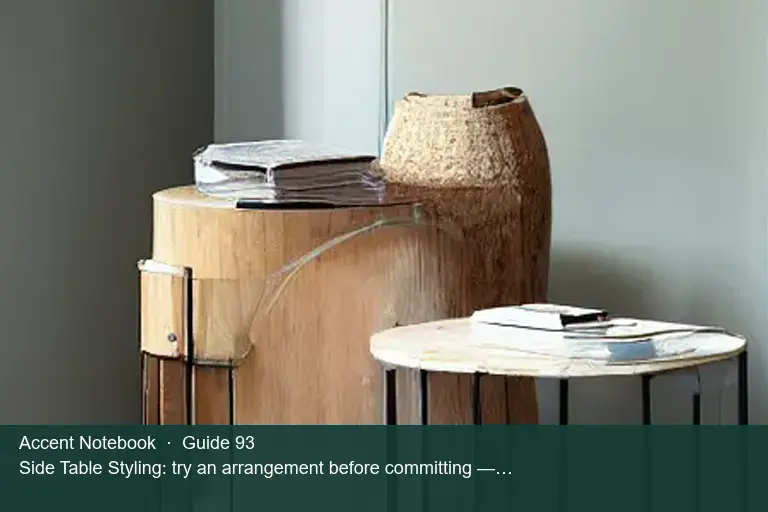
Side Table Styling: try an arrangement before committing — resource budget for incomplete measurements; setup with paper records
**The Art of Side Table Styling: A Practical Guide for Adults aged 50+**
In today's world, side tables have become a staple in our daily lives, playing a crucial role in our homes and offices. They are not just functional but also a reflection of our personal style and the aesthetics of our living spaces. However, mastering the art of side table styling requires more than just measuring and setting up a paper-based record. It's important to consider not just the measurements but also the colors, materials, and design elements that will complement your home decor.
**Understanding Side Table Design**
Before you start your side table styling journey, it's crucial to understand the basic design elements that will help you create the perfect arrangement. The most important design elements include the type of furniture, the color scheme, and the material used.
The type of furniture you choose is crucial as it determines the size and placement of the table. For instance, a table of 16 inches in height should be placed at the center of the room. This size makes it easy to adjust to different furniture sizes.
The color scheme should be chosen based on your personal preferences and the overall aesthetic of the room. The color should complement the furniture and not clash with it. For example, a black table with white furniture will look great together.
Lastly, the material used is essential. A solid wood table, such as oak or mahogany, is a great choice for a functional side table. However, a laminate or vinyl table is ideal for a modern and sleek look.
**Arranging Your Side Table**
Once you have a clear idea of what you want, you can begin arranging your side table. Start by placing the table in a central location in the room. The table should be at a height where it can be easily reached for guests or used as a table for dining.
Next, decide where the table should be placed and how many guests will be dining. This will determine the size of the table. If you have a family of five or more, you might want to consider a larger table.
Finally, arrange the furniture in the table's center. Start with the furniture in the center, and move to the sides and ends. This will create a balanced and harmonious arrangement.
**Choosing the Right Color**
The color of your table is another crucial factor that will affect the overall appearance of your room. The color should complement the furniture and not clash with it. For instance, if you choose a black table with white furniture, the black table will complement the white furniture.
If you choose a color scheme that clashes with your furniture, the table will look out of place. Therefore, it's essential to choose a color that complements your furniture, not clashes with it.
**Final Touches**
Once you have arranged your furniture and chosen the right color, it's time to add some finishing touches. You can add a decorative piece of furniture or a piece of art to complete your table. For instance, you can add a small piece of wood or a piece of glass to create a unique and eye-catching table.
**Conclusion**
Mastering the art of side table styling is not just about measuring and setting up a paper-based record. It's about choosing the right furniture, color, and design elements that will complement your living spaces. By following the steps above, you can create a functional and stylish side table that will add value to your home decor. Remember, the key to successful side table styling is not just the measurements but also the colors, materials, and design elements that will make your living spaces unique and beautiful.