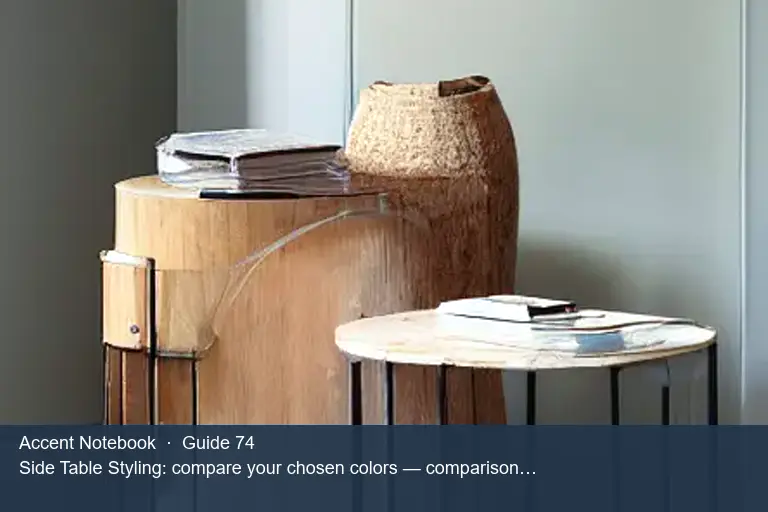
Side Table Styling: compare your chosen colors — comparison table for incomplete measurements; setup with paper records
When working with side table styling, especially with incomplete measurements, it’s important to take a methodical approach. Start by gathering all available details from your paper records—note the dimensions, material type, and any existing design elements. This foundation will guide your decisions without relying on guesswork. If certain measurements are missing, consider how you can adjust your vision to fit the space or materials you have on hand.
Choosing colors for a side table should reflect both aesthetics and functionality. Look at the room’s overall palette and think about how your chosen hues will complement existing furniture or decor. A subtle contrast can add depth without overwhelming the space, while a cohesive scheme enhances harmony. Take note of lighting conditions, as they can dramatically affect how colors appear.
Once you’ve narrowed down your options, sketch a quick layout on paper to visualize the arrangement. This step helps you see how the table will interact with other elements and ensures your styling choices are practical. Remember, the goal is balance—between style and usability. By focusing on these steps, you’ll create a thoughtful, well-considered side table that enhances your space without unnecessary complexity.