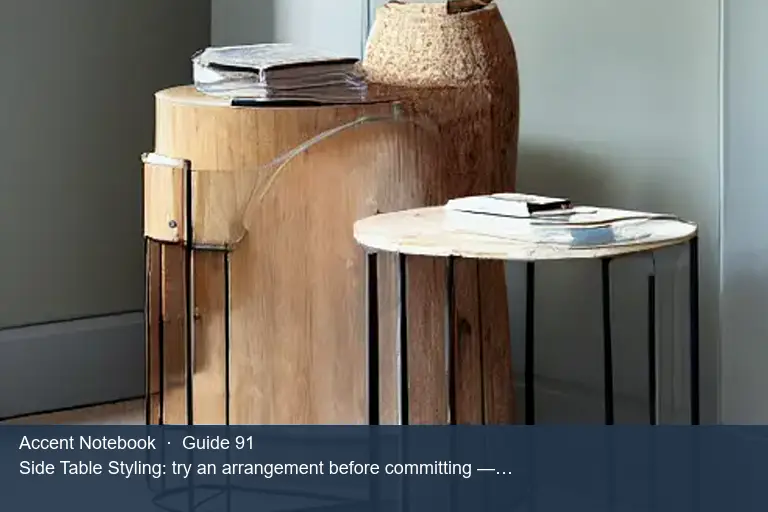
Side Table Styling: try an arrangement before committing — question guide for mixed item sizes; setup with paper records
When dealing with a side table that features mixed item sizes, it’s wise to take your time planning the arrangement. Start by gathering your current pieces and sketching a rough layout on paper or using a digital tool. This helps visualize how different items will interact without altering the space. Consider grouping similar sizes together while leaving room for flexibility—this prevents clutter and maintains balance. Remember, a well-thought-out setup not only looks better but also feels more intentional.
Document your choices as you go; note which combinations feel stable and which seem forced. This practice reinforces your decision-making and gives you a clear reference later. If you’re unsure about a placement, pause and ask yourself what the space needs to support both function and aesthetics. Taking this step ensures you’re not rushing into a final arrangement that might need adjustment later.
Once you’ve reviewed your options, take a moment to step back and assess the overall flow. A good side table should complement its surroundings without overwhelming them. By using paper records or a simple sketch, you create a tangible guide that supports confidence in your choices. This method is especially valuable for readers who value precision and thoughtful design.