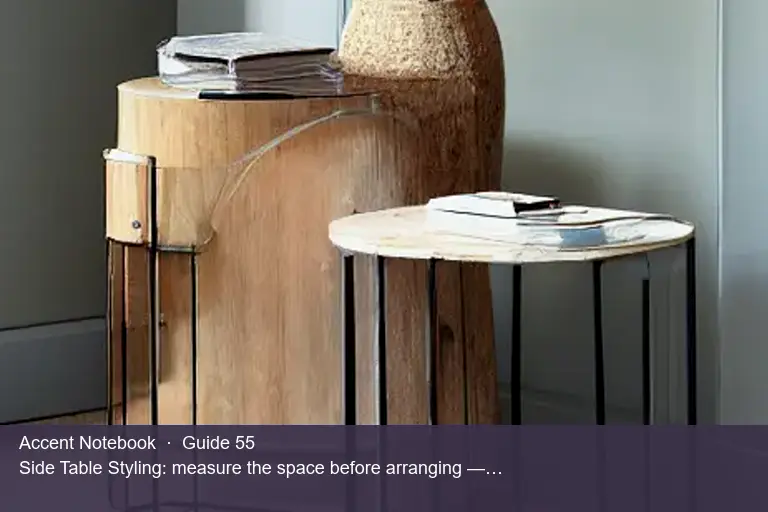
Side Table Styling: measure the space before arranging — revision plan for a seasonal rotation; setup with paper records
In the realm of side tables, the ability to measure the space before arranging can be a valuable tool, especially in the context of a seasonal rotation. This practice is crucial as it allows us to ensure that the selected side tables fit within the available space, maximizing their utility and making the space more efficient and harmonious. For a season, especially in the warmer months, it's essential to measure the space before arranging to avoid any unnecessary alterations or rearrangements that could disrupt the arrangement.
Before beginning the arrangement process, it is imperative to carefully measure the available space. This is where the "paper records" method can come into play. The first step is to gather a variety of items that can serve as paper records for the measurement process. This could include sheets of paper, markers, and a measuring tape. These items are chosen because they are readily available and can be used as a reference to measure the space accurately.
Next, proceed to the measuring process. Lay out the paper records and the measuring tape on a flat surface. Carefully measure the dimensions of the space, starting from the edges. This includes the length, width, and height of the space. It's crucial to measure the space thoroughly, ensuring that all corners and edges are accounted for. This will help in making necessary adjustments to the arrangement.
Once the measurements are taken, it's time to consider the arrangement of the side tables. The key is to ensure that the side tables fit within the available space while also making aesthetic and functional decisions. This involves evaluating the placement of the side tables based on their intended function and the available space. For example, a high table might be placed near a window or a door, while a low table might be placed near a corner of the room.
In the process of arranging the side tables, it's important to make sure that the arrangement is not only aesthetically pleasing but also functional. This involves selecting side tables that complement the space and the intended function of the room. For instance, a desk might be selected for its practicality and the need for a desk, while a coffee table might be chosen for its capacity and the need for a coffee table.
As a result of the measurements and arrangement process, it's essential to take notes of the measurements taken. These notes can be used to create a paper record of the measurements, which can be used for reference and to plan future arrangements. This will help in making future arrangements and in avoiding unnecessary alterations that could disrupt the arrangement.
In conclusion, the ability to measure the space before arranging can be a valuable tool in the context of a season, especially in the warmer months. By measuring the space and considering the arrangement based on the available space and the intended function of the room, it's possible to ensure that the selected side tables fit within the available space, maximizing their utility and making the space more efficient and harmonious.