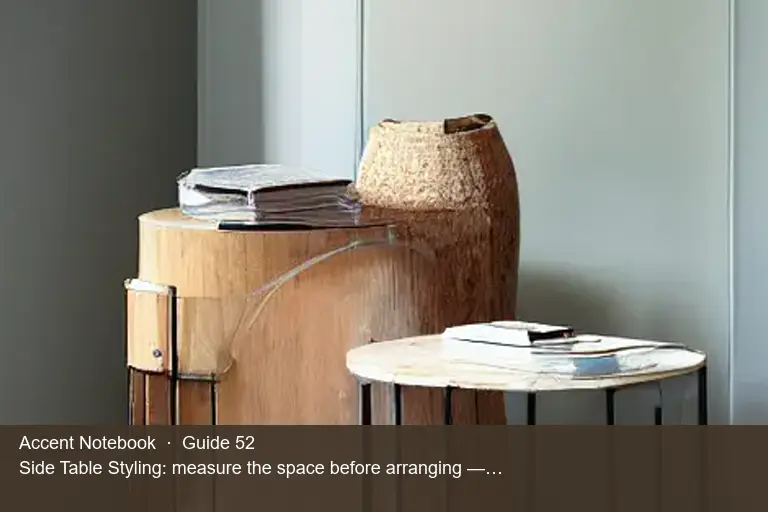
Side Table Styling: measure the space before arranging — review calendar for mixed item sizes; setup with paper records
**Side Table Styling: Measure the Space Before Arranging for Mixed Item Sizes**
Side tables have been a staple in dining rooms for centuries, serving as functional, decorative elements that can be customized to suit various tastes and needs. Whether you're looking to add a touch of elegance to your dining room or want to create a more relaxed ambiance, understanding how to arrange side tables is crucial. In this article, we'll guide you through the process of measuring the space before you start arranging, focusing on mixed item sizes and the importance of paper-based records in your side table arrangements.
**Understanding Mixed Item Sizes**
Mixed item sizes refer to items that are either small, medium, or large in size, each with their own unique characteristics. When you're arranging side tables, it's essential to consider the size differences between items to ensure your arrangement is visually appealing and functional. For example, a small item might be a small plate, while a medium item might be a medium plate. By measuring the space, you can determine the best size for each item and decide whether to place them side by side, end-to-end, or in between.
**Setting Up with Paper Records**
Paper-based records are crucial in side table arrangements to help you determine the best placement and size of items. Here’s how you can use paper records in your side table styling:
- **Measure the Space**: First, measure the width and height of the space where you want to arrange your side table items. This will give you a baseline for the space's capacity, ensuring you're not overcrowding or underutilizing the space.
- **Review the Calendar**: Consider the calendar for mixed item sizes. This is especially helpful when arranging side tables because it allows you to see how the items fit together. For instance, if you have a small item, you can see how it fits with a medium item, and vice versa.
- **Arrange with Paper Records**: Use paper records to determine the best placement for each item. For example, a small item can be placed side by side with a medium item, and a large item can be placed end-to-end. This helps you visualize the best way to arrange each item.
- **Consider the Overall Look**: Think about the overall look of the space and how you want to display the items. A small item might be a small plate, while a medium item might be a medium plate. By measuring the space and considering the layout, you can ensure your arrangement is visually appealing and functional.
**Measuring the Space Before Arranging**
Measuring the space before you start arranging is vital because it helps you determine the best size for each item and the best way to display them. By measuring the space, you can ensure your arrangement is visually appealing and functional, and you can also visualize the best way to display each item. If you measure the space before you start arranging, you'll be able to see the best way to arrange each item, and you'll be able to determine the best size for each item. This is a key step in the process of arranging side tables, and it helps you create a more organized and functional dining room.
**Summary**
In this article, we've walked you through the process of measuring the space before you start arranging side tables. We've highlighted the importance of mixed item sizes, the use of paper records, and the process of measuring the space before you start arranging side tables. By following these steps, you'll be able to create a more organized and functional dining room that suits your needs and preferences.