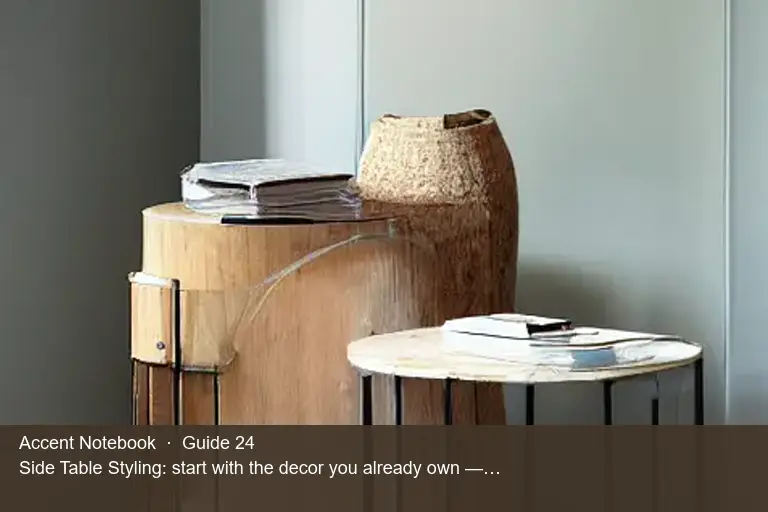
Side Table Styling: start with the decor you already own — troubleshooting map for a narrow display area; setup with paper records
Side tables are a staple in the home decor scheme, but they can be a bit of a nuisance when it comes to choosing the right style for your narrow display area. This article will provide you with the tools to start with the decor you already own and the practical steps to ensure your side table displays are functional and aesthetically pleasing. Let’s explore the steps you need to take to make the most of your limited space.
### Step 1: Identify the Space
First, determine the space you want to occupy. Narrow display areas often provide limited space, which can be challenging for side tables. Consider the following factors when choosing a side table:
- **Size and Shape:** Side tables come in various shapes and sizes, but narrow display areas need a small, compact design. Look for side tables that fit within your display area's limitations.
- **Window Height:** Narrow display areas often have a limited window height, so choose a side table that can fit within the available space.
- **Lighting:** Narrow display areas are often located near windows or in the middle of a room. Consider side tables with a light, airy design that can maximize natural light.
### Step 2: Select the Right Decor
Once you’ve identified your space, it’s time to select the appropriate decor for your side table. Here are some tips to make the most of your narrow display area:
- **Color Scheme:** Choose a color scheme that complements your existing decor and the space you want to display. A neutral color scheme can make a side table stand out, while a bold color can create a dramatic display.
- **Materials:** Side tables can be made from a variety of materials such as wood, metal, or plastic. Choose materials that are durable and can withstand regular use, such as wood.
- **Size and Shape:** If you need a small side table, consider a smaller size and shape that can fit within your narrow display area. If you need a larger side table, choose a larger size that can accommodate a larger display.
### Step 3: Layout and Arrange
Once you’ve selected the appropriate decor, it’s time to layout and arrange your side table. Here’s how:
- **Layout:** Position your side table in a way that allows natural light to illuminate it. If your room has a window, consider positioning your side table near the window to maximize natural light.
- **Placement:** Place your side table near a window or in the center of the room to maximize natural light.
- **Spacing:** Ensure that your side table is spaced to allow natural light to illuminate it. If your room has a window, consider spacing your side table around the window to maximize natural light.
### Step 4: Finishing Touches
Finally, it’s time to finish your side table. Here’s how:
- **Finishing:** Finish your side table with a polished finish to match your existing decor. If you prefer a more rustic look, consider adding some decorative touches such as a wooden frame or a decorative plaque.
- **Decorative Elements:** Add decorative elements such as a vase, a plant, or a piece of artwork to make your side table more inviting.
### Conclusion
Congratulations! You’ve completed the process of selecting the right decor and arranging your side table. Now, it’s time to start displaying your side table in the narrow display area. Remember, the key to a successful display is to choose the right decor, layout, and finishing touches. With a little planning and organization, you can make your side table a focal point in your home decor scheme.