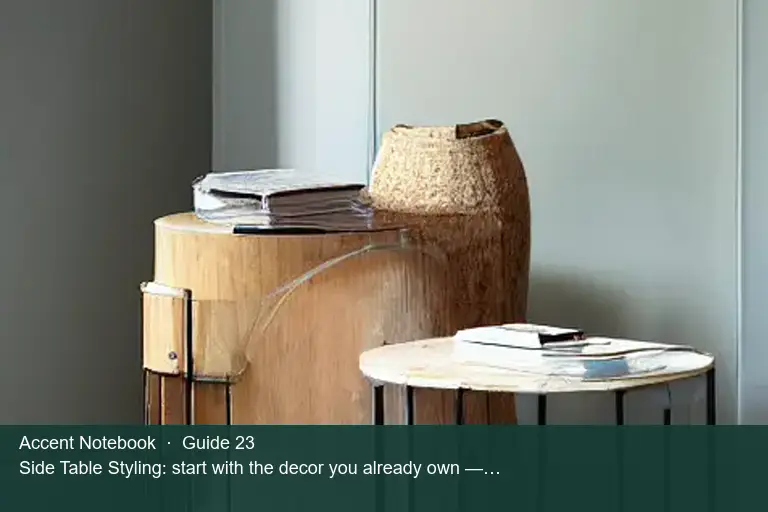
Side Table Styling: start with the decor you already own — comparison table for a narrow display area; setup with paper records
Side tables are a popular piece of furniture in both adults and children’s rooms, though they are typically placed in a corner or at the back. The availability of side tables is not limited to adults but is also widely available in children’s rooms. The size of a side table is determined by the available space, and the decor already available in a side table is often sufficient for a narrow display area. This article will explore the proper way to start with the decor you already own, and the options for setting up a side table with paper records.
The first step in the side table styling process is to assess the existing decor. In a narrow display area, it is important to select a side table that fits the space and the decor already available. This can be done by comparing different side table styles and choosing the one that best fits the decor already in the room. This will ensure that the side table is a functional, practical piece of furniture that fits the decor you have already chosen.
The next step is to decide on the type of paper records you want to display on the side table. Paper records are typically used for personal information such as personal documents, financial records, and birth certificates. The type of paper records you choose will depend on the purpose of the side table and the space you have in the room. If you are displaying personal documents, it is best to use a dedicated side table that is specifically designed for storing documents. If you are displaying financial records, a side table that has a drawer or a separate compartment for storing financial documents will be more appropriate. If you are displaying birth certificates, a side table that has a drawer or a separate compartment for storing birth certificates will be more appropriate.
Once you have decided on the type of paper records you want to display, the next step is to decide on the size of the side table. The size of the side table will depend on the decor already in the room and your personal preference. The most important thing is to choose a side table that is large enough to accommodate the decor already in the room, but not so large that it is impractical. If the side table is too large, it will be difficult to maneuver it and may become difficult to clean. If the side table is too small, it will not be functional for displaying the decor you have already chosen.
Once you have decided on the size of the side table, the next step is to determine the design of the side table. The design of the side table will depend on the decor already in the room, the personal preference, and your personal style. The most important thing is to choose a side table that is functional, practical, and comfortable to use. If the side table is not functional, it will not be a useful piece of furniture. If the side table is not comfortable, it will not be a useful piece of furniture.
The final step in the side table styling process is to select the finish of the side table. The finish of the side table will depend on the decor already in the room, the personal preference, and your personal style. The most important thing is to choose a finish that is durable, easy to clean, and matches the decor already in the room. If the finish is not durable, it will not be a functional piece of furniture. If the finish is not easy to clean, it will not be a functional piece of furniture.
In conclusion, side tables are a useful and practical piece of furniture that can be started with the decor you already own. The first step is to assess the existing decor, the type of paper records you want to display, the size of the side table, the design of the side table, and the finish of the side table. By following these steps, you can start with the decor you already own and begin setting up a side table with paper records that is functional, practical, and comfortable to use.