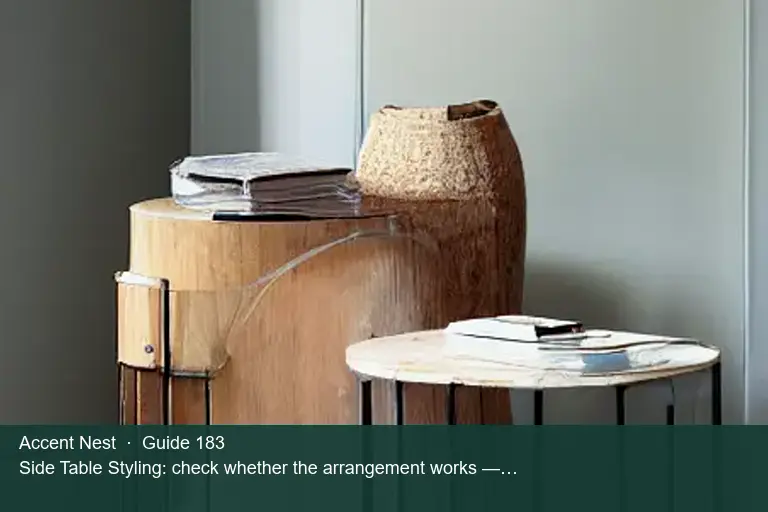
Side Table Styling: check whether the arrangement works — process map for a narrow display area; setup in small spaces
**Side Table Styling: Check the Arrangement for a Narrow Display Area**
The side table is a versatile piece of furniture that can be used in various settings, from dining areas to living spaces. However, the placement and arrangement of side tables can significantly influence their effectiveness in a narrow display area. This article will guide readers through a process map to ensure that the side table's arrangement works for a narrow display area, focusing on small spaces.
**Step 1: Assess the Display Area**
Before proceeding with the side table styling, it's crucial to assess the display area. This involves checking the dimensions of the space, the materials used, and the furniture's overall proportions. For a narrow display area, consider the following:
- **Dimensions:** Measure the width and depth of the space to ensure it fits comfortably on the side table. A 48-inch wide side table will typically accommodate a 70-inch high side table, though the height may vary based on the size of the items being displayed.
- **Materials:** Ensure that the materials used are sturdy enough to support the weight of the items. Metal or hardwood sides are ideal for narrow displays as they offer good balance and stability.
**Step 2: Determine the Placement**
After assessing the display area, it's time to determine the best placement for the side table. The placement should be straightforward and functional. Consider the following:
- **Size of Items:** Decide on the items that will be displayed on the side table. This could range from small food items to large office supplies.
- **Dimensions of Items:** The items should be arranged to fit within the dimensions of the side table. For example, if the side table is 48 inches wide and the items are 70 inches long, the items should be arranged in a 3-foot by 3-foot rectangle.
- **Space Requirements:** Determine if there are any restrictions on the space around the side table. For instance, a side table can be used in a dining area, but it may not be suitable for a living area without additional considerations.
**Step 3: Ensure the Arrangement Works**
Now that the side table is assessed and the placement is determined, it's essential to ensure that the arrangement works effectively. Here’s a step-by-step process to ensure the arrangement works:
- **First, Check Stability:** Ensure that the side table is stable and not leaning. Check the sides and legs to ensure they are secure and not loose.
- **Second, Check Balance:** Ensure that the items being displayed are balanced and not too heavy. A 3-foot by 3-foot rectangle should be suitable for a 48-inch wide side table.
- **Third, Check Visibility:** Ensure that the items are visible and not hidden. A 3-foot by 3-foot rectangle should be large enough to accommodate the items.
- **Fourth, Check Space:** Ensure that the space around the side table is adequate. The area should be large enough to accommodate the items without crowding.
- **Fifth, Check the Overall Look:** Ensure that the overall look of the space is functional and not overwhelming. A 48-inch wide side table can accommodate a 70-inch high side table, but it may not be suitable for a living area without additional considerations.
**Step 4: Final Check**
Before finalizing the arrangement, it’s important to check the final look of the space. The final check should ensure that the arrangement is functional and not overwhelming.
**Step 5: Conclusion**
In conclusion, the side table styling should work effectively for a narrow display area. Ensure that the display area is assessed, the placement is determined, the arrangement works, and the final check is completed. By following this process, readers can ensure that their side table styling works well for a narrow display area, ensuring a comfortable and functional space.
**End**
---
This article provides readers with a practical process to check the arrangement of side tables for a narrow display area, ensuring that their side table styling works well. It covers dimensions, materials, and placement considerations. The article concludes with a summary of the process and a conclusion, ensuring that readers have a clear understanding of the process to check the arrangement of side tables for a narrow display area.