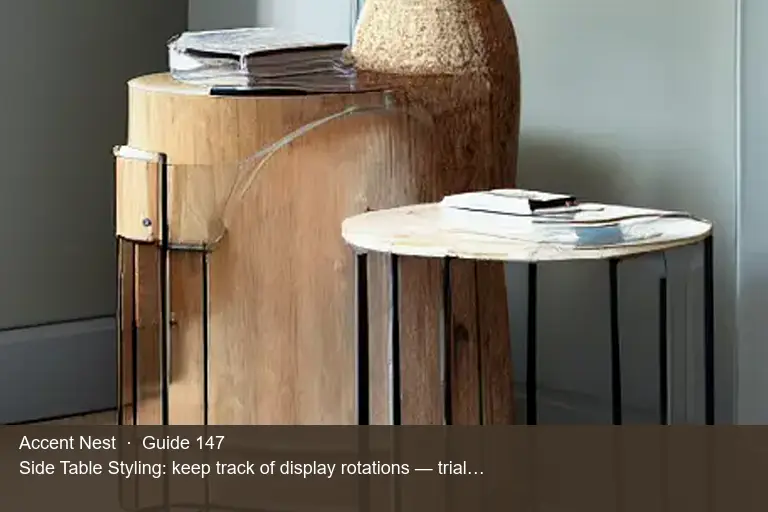
Side Table Styling: keep track of display rotations — trial protocol for a short styling session; setup in small spaces
**Side Table Styling: Keep Track of Display Rotations**
In today's digital age, side tables are no longer just decorative elements; they are now a fundamental part of our daily lives. However, as we navigate the complexities of life, it's essential to prioritize our appearance and maintain a consistent, visually appealing look. One way to achieve this is through side table styling, where the right design can transform a simple piece of furniture into a focal point and a source of conversation. This article will explore the practical aspects of side table styling, focusing on how to keep track of display rotations for your side table.
**Practical Task: Side Table Styling: Keep Track of Display Rotations**
The primary goal of side table styling is to enhance the display of your items, whether it's books, magazines, or artwork. To do this effectively, it's crucial to keep track of the display rotations of your items. This is where a side table styling trial protocol can come into play. A side table styling trial protocol is a short styling session designed to help you identify the best display rotations for your items. This can be a great way to improve your overall visual appeal and maintain a consistent display.
**Setup in Small-Space Plans**
Many small spaces are limited in terms of space and functionality. Therefore, it's essential to create a side table styling trial protocol for small spaces. This can be done by setting up a small table area with a side table on one side. This setup will help you focus on the display rotations of your items without having to move your entire space. This approach is particularly useful in small spaces where visibility is limited.
Once you have your side table setup, it's time to begin your side table styling trial protocol. The first step is to choose a side table that is appropriate for your space. This can be a simple wooden table or a more complex table with drawers. The second step is to select items that will be displayed on the table. This could be books, magazines, or artwork. Once you have your items, it's time to decide on the display rotations of your items. This could be by selecting the items to be displayed, or by selecting items to display in a specific order. Once you have your display rotations, it's time to layout your items on the table.
Once your items are displayed on the table, it's time to adjust the layout. This could be by rearranging the items to create a balanced display. Alternatively, you could use a tool or a method to create an optimal display. Once you have your display layout, it's time to adjust the placement of your items. This could be by adjusting the position of the items to create a balanced display.
Once your display layout is complete, it's time to test your side table styling trial protocol. This can be done by displaying your items on the table and observing how they are displayed. This will help you identify any issues with your display rotations and make any necessary adjustments. It's also essential to test your display layout to ensure that it is balanced and displays items in a consistent manner.
By following these practical tasks, you can keep track of display rotations for your side table. This can help you maintain a consistent display and improve your overall visual appeal. By following these practical tasks, you can ensure that your side table is in the best possible condition and that it can display items in the way that best suits your needs. With a side table styling trial protocol, you can keep track of display rotations and improve your overall appearance.