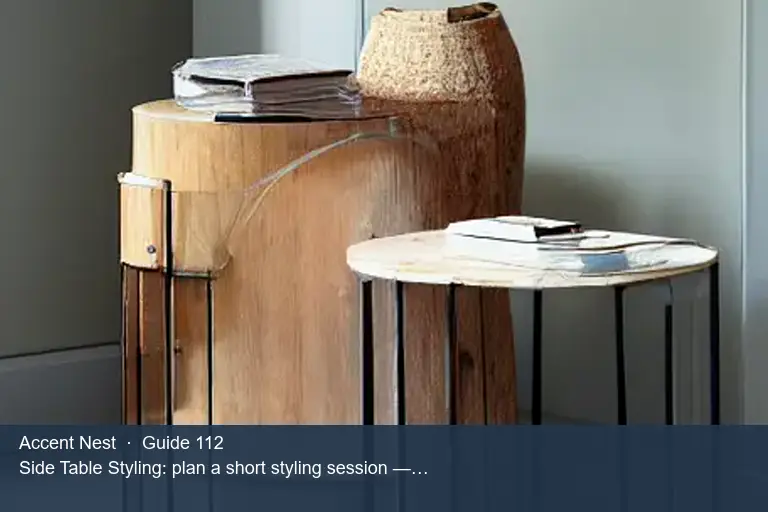
Side Table Styling: plan a short styling session — troubleshooting map for mixed item sizes; setup in small spaces
The side table is a versatile piece that can enhance any room, whether it’s a living room, dining room, or bedroom. Whether you prefer a sleek modern design or a more rustic and traditional look, a side table can be the centerpiece of your decor. In this article, we’ll guide you through the process of selecting the right side table for your small space, and how to plan a short styling session to create a cohesive and visually appealing setup.
### Understanding Side Tables
Side tables, also known as side tables, are versatile pieces of furniture that come in various shapes, sizes, and finishes. They are commonly found in living rooms, dining rooms, and bedrooms, and their primary purpose is to support tableware, bookshelves, and other furniture elements. In a small space, side tables can be a great addition to the decor, providing a focal point and a unique piece of furniture.
### Selecting the Right Side Table
When selecting the right side table for your small space, it’s important to consider both the size and the shape of the table. If you prefer a larger side table, you’ll need to select one that is large enough to accommodate the items you’ll be displaying. If you prefer a smaller side table, you’ll need one that is smaller and more compact.
### Small-Space Plans
When planning a short styling session, it’s best to start with the smallest side table possible. This will ensure that you’re working within your budget and can focus on creating a cohesive look. In small spaces, a side table that is just large enough to fit the items you’ll be displaying will work well. If you’re looking for a smaller side table, you’ll need one that is small enough to fit the items you’ll be displaying, but not so small that it becomes a distraction.
### Tools and Materials
When planning your short styling session, you’ll need some tools and materials to keep the session organized and productive. You’ll need a tablecloth or a napkin to help you keep track of items, a measuring tape to measure the size of the table, and a small box or container to hold the items you’ll be displaying.
### Planning Your Short Styling Session
- Measure the size of the items you’ll be displaying. This will help you determine the size of the side table that will fit them. 2. Choose a small space for your short styling session. This will ensure that you have the necessary tools and materials to keep the session organized and productive. 3. Set up the table in a small space. This will ensure that you have enough space to fit the items you’ll be displaying. 4. Arrange the items you’ll be displaying in a way that complements the side table. This will ensure that the items you’ll be displaying are easily visible and visible. 5. Use the tools and materials to create a cohesive and visually appealing setup. This will ensure that your short styling session is a success.
### Troubleshooting Map for Mixed Item Sizes
When working with mixed item sizes, it’s important to have a troubleshooting map to help you create a cohesive and visually appealing setup. Here’s a map of common issues that can arise with mixed item sizes:
- Different sizes and shapes: This can cause confusion when arranging the items. You’ll need to ensure that the items are similar in size and shape so that they can be easily distinguished and arranged. 2. Uneven placement: If the items are placed too close together, it can cause a mess. To avoid this, you’ll need to make sure that the items are spaced appropriately. 3. Inconsistent color and texture: If the items have different colors and textures, it can cause a mess. To avoid this, you’ll need to make sure that the items are similar in color and texture. 4. Lack of balance: If the items are arranged in a way that creates a lack of balance, it can be distracting. To avoid this, you’ll need to make sure that the items are evenly spaced.
### Conclusion
In conclusion, when working with mixed item sizes, it’s important to have a troubleshooting map to create a cohesive and visually appealing setup. This will help you avoid common issues and ensure that your short styling session is a success.