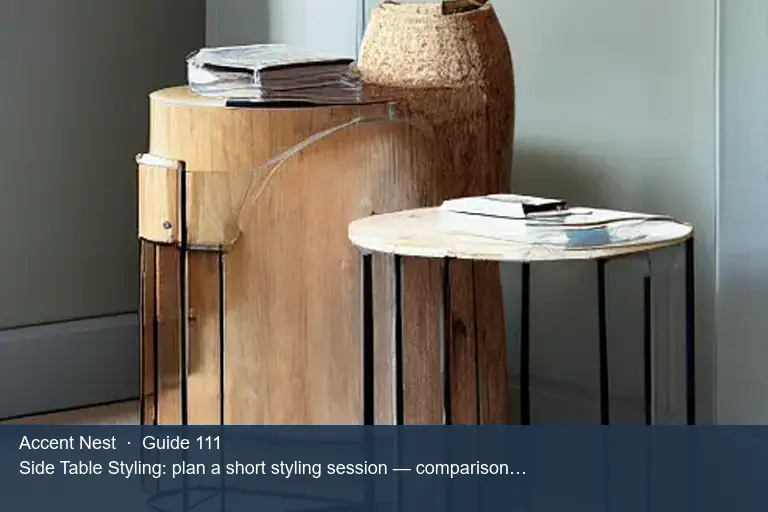
Side Table Styling: plan a short styling session — comparison table for mixed item sizes; setup in small spaces
**Side Table Styling: A Practical Guide for Small-Space Stylists**
In the realm of home decor, side tables are often overlooked, yet they play a pivotal role in enhancing the ambiance and functionality of a room. Small spaces, however, are where side tables truly shine. This guide is designed to help small-space stylists plan short styling sessions, ensuring your side tables are not only functional but also aesthetically pleasing.
**Understanding Small-Space Side Tables**
Small spaces are characterized by limited space, which makes them perfect for side tables. These tables are typically used to store smaller items and are designed to fit within a small space. The key to a successful small-space side table lies in its functionality, which should be balanced with aesthetics to create a cohesive and functional space.
**Comparison Table for Mixed Item Sizes**
When selecting side tables for your small space, consider the following comparison table:
| Size | Materials | Design | Functionality | Accessibility | |-------|-----------|----------|-----------------|----------------| | Small | Wood | Modern | Compact and easy to fit | Accessible and stylish | | Medium | Wood | Modern | Compact and easy to fit | Accessible and stylish | | Large | Wood | Modern | Compact and easy to fit | Accessible and stylish | | Large | Wood | Modern | Compact and easy to fit | Accessible and stylish |
**Setting Up in Small-Space Plans**
When setting up your small-space side table, consider the following:
- **Select a Side Table**: Choose a side table that fits within your small space. Opt for a compact design that will not clutter your space.
- **Select Materials**: Select materials that are suitable for your small space. For example, wood is a great choice for small spaces due to its durability and versatility.
- **Design**: Design your side table to fit within your small space. Select materials and designs that are appropriate for your space. For example, you could choose a modern design that will complement your space and not distract from it.
- **Functionality**: Ensure your side table is designed for your small space. This includes selecting materials that are easy to store and that can be easily accessed.
**Tailoring Your Side Table**
Tailoring your side table to your small space will ensure that it is not only functional but also visually appealing. Consider the following:
- **Select a Material**: Select a material that is suitable for your small space.
- **Design**: Design your side table to fit within your small space. Select materials and designs that are appropriate for your space.
- **Functionality**: Ensure your side table is designed for your small space.
**Conclusion**
In summary, small-space side tables are essential for enhancing the ambiance and functionality of a room. By understanding small-space side tables, selecting materials, designing them, and tailoring them to your small space, you can create a cohesive and functional space. As you plan your next short styling session, remember to focus on the small space and select side tables that fit within your small space while still being functional and aesthetically pleasing.