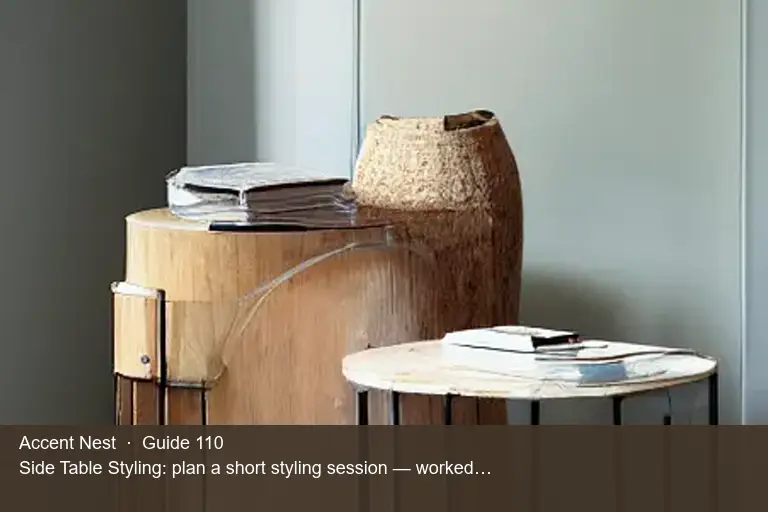
Side Table Styling: plan a short styling session — worked example for existing decor; setup in small spaces
When planning a short styling session for side tables, it's essential to consider the available space and the intended use of your room. For a small space, choosing the right type of side table can make a big difference in the look and feel of your room. In this article, we'll guide you through a short styling session, focusing on a small space and a side table, and offer you practical advice on selecting the right type of table for your needs.
Step 1: Assess the available space Start by examining your existing decor and the space you have. Consider the size of your room, the amount of space you have, and the furniture you have. This will help you determine the right size and shape of the side table for your needs.
Step 2: Consider your intended use Now that you have an idea of the space you have and the furniture you have, it's time to consider your intended use. What kind of space is best suited for your side table? Is it a small room, a large room, or a room with a combination of large and small rooms? What kind of furniture will you be using the side table for? This will help you determine the right type of side table for your needs.
Step 3: Choose a side table Once you have an idea of the space you have and the furniture you have, it's time to choose a side table. Consider the size and shape of the table, the material it's made of, and its color and design. Make sure the table fits the size of your room and the amount of space you have. Consider the color and design of the table as well, as they can help you create a cohesive look for your room.
Step 4: Arrange the furniture Now that you have your side table, it's time to arrange the furniture. Arrange the furniture in a way that creates a harmonious look and feel for your room. Consider the placement of the table, the furniture, and the furniture pieces that you want to use. Arrange the furniture in a way that creates a balance and harmony for your room.
Step 5: Add a touch of personality Finally, add a touch of personality to your room by adding a touch of personality to your side table. Consider the color and design of the table and add a small piece of personality to it. This can be done by adding a small piece of artwork or a small piece of furniture to the table. This can make your room feel more personal and comfortable.
Step 6: Create a plan Once you have your side table, it's time to create a plan. Create a plan that outlines the colors and designs of the table, the furniture pieces that you want to use, and the placement of the furniture. This plan will help you create a cohesive look and feel for your room.
Step 7: Execute the plan Once you have your plan, it's time to execute the plan. Execute the plan by arranging the furniture and adding a touch of personality to your side table.
In conclusion, selecting the right type of side table for your small space depends on your intended use and the available space. Consider the size, shape, color, design, and placement of the table. Add a touch of personality to your room by adding a small piece of artwork or a small piece of furniture to the table.