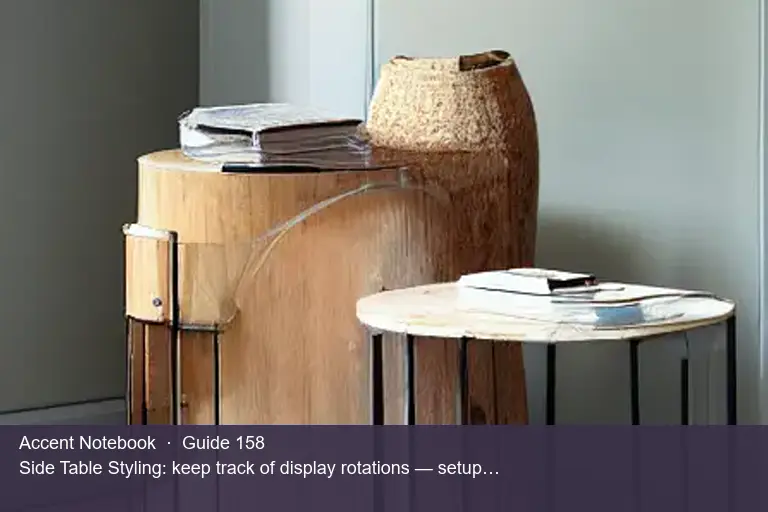
Side Table Styling: keep track of display rotations — setup audit for a temporary arrangement; setup with paper records
Side tables are a common architectural element in homes and offices, providing a functional space for storing items and organizing storage and display. In a temporary arrangement, side tables can be used to display various items or to serve as a temporary storage solution. However, side tables can also be a source of display rotation, which can be an area of concern for a temporary arrangement. This article addresses the practical task of keeping track of display rotations for side tables in a temporary arrangement.
The first step in keeping track of display rotations for side tables is to gather information about the items that will be displayed. This information can be gathered through a comprehensive inventory or by using a side table display rotation checklist. The checklist should include the items that will be displayed, their quantities, and any specific requirements or restrictions that should be taken into account when displaying the items.
Once the items have been identified and the necessary information has been collected, the next step is to determine the appropriate size and layout for the side table. The size of the side table should match the items that will be displayed to ensure proper organization and display. The layout of the side table should be designed to accommodate the items and to provide enough space for rotation.
The third step is to determine the appropriate color and style for the side table. This step involves selecting a color that matches the interior design of the room or the items that will be displayed. The style of the side table should be chosen to match the interior design of the room, or the items that will be displayed, to ensure that the display rotations are consistent with the overall design.
The fourth step is to determine the appropriate number of display rotations for the side table. The number of display rotations should be determined based on the items that will be displayed, their quantities, and any specific requirements or restrictions that should be taken into account when displaying the items. The number of display rotations should be set to ensure that the display rotations are consistent with the overall design and the display rotation requirements of the side table.
Finally, the next step is to prepare the side table by placing the items in the designated location and securing the side table in place. The items should be placed in a way that allows for easy rotation and access to the items.
The final step is to organize the side table by placing the items in the designated location. The items should be organized in a way that allows for easy rotation and access to the items. The items should be arranged in a way that allows for easy rotation and access to the items.
In conclusion, side tables can be a useful architectural element in a temporary arrangement, but they can also be a source of display rotation. By following the steps outlined above, the display rotations can be kept track of for a temporary arrangement.