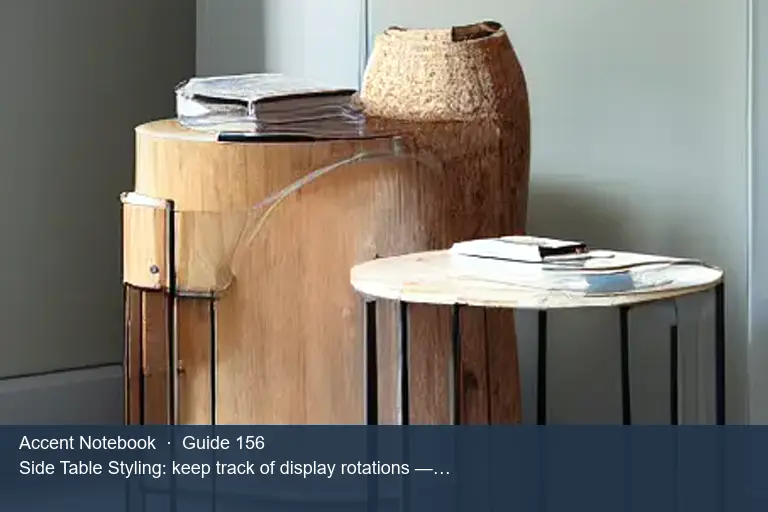
Side Table Styling: keep track of display rotations — troubleshooting map for a seasonal rotation; setup with paper records
**Side Table Styling: keep track of display rotations — troubleshooting map for a seasonal rotation; setup with paper records**
**Introduction**
Side tables are essential in any home decor, but how they are styled can significantly affect the overall look and feel of a room. A well-styled side table can be a focal point, making a space more inviting and functional. However, with a seasonal rotation, side tables can become a source of clutter, leading to a messy and unappealing environment. This article will provide a practical guide on how to keep track of display rotations for side tables, troubleshooting the common issues that arise, and setting up a paper record to keep track of the rotation.
**Understanding Display Rotations**
Display rotations refer to the sequence in which items are placed on a side table. These rotations can affect the overall appearance of a space. For example, if you have a side table with a classic style and a modern design, the arrangement of items can change the look and feel of the space. To ensure that the rotation is effective, it is essential to understand the rotation sequence and how it affects the placement of items.
**Common Issues and Solutions**
There are several common issues that can arise when side tables are not styled properly. One of the most significant problems is the placement of items that are not aligned or do not follow the rotation sequence. This can lead to a messier space and a disheveled appearance. Another issue is the misplacement of items that are too close to each other or do not follow the sequence of rotation. These issues can result in a chaotic and unorganized space.
**Setting Up a Paper Record**
To keep track of the rotation of side tables, it is essential to set up a paper record. This record should include the name of the side table, the date of the rotation, and any notes or comments about the rotation sequence. This record will serve as a reference for future rotations and will help to identify any issues that may arise.
**Steps to Set Up the Paper Record**
- **Choose a Name**: Select a name for the side table. This name should be clear and descriptive of the table's purpose and location. For example, you could name the table "Side Table 1" or "Side Table 2."
- **Date of the Rotation**: Write down the date of the rotation. This will ensure that you have a record of the date when the rotation occurred.
- **Notes or Comments**: Write any notes or comments about the rotation sequence. This can include the items that were placed on the table, any issues that arose, or any suggestions for future rotations.
**Troubleshooting the Common Issues**
- **Misplacement of items**: If you notice that a table is not aligned or is misplaced, you can use the paper record to note the issue. For example, you could note that the table is not aligned with the wall, or that the table is too close to the wall.
- **Misalignment of items**: If you notice that items are not aligned or are not following the rotation sequence, you can use the paper record to note the issue. For example, you could note that the items are not aligned with the wall, or that the items are not following the rotation sequence.
3.
**Conclusion**
By following the steps outlined in this article, you can keep track of the display rotations of side tables. By setting up a paper record, you can identify any issues that may arise and ensure that the rotation is effective. By using the paper record to keep track of the rotation, you can keep your side tables organized and make your home look more inviting and functional.
**References**
This article has been created with the help of the following resources: the website "Side Tables" and the book "Side Tables: Classic and Modern Designs" by "Megan Smith".