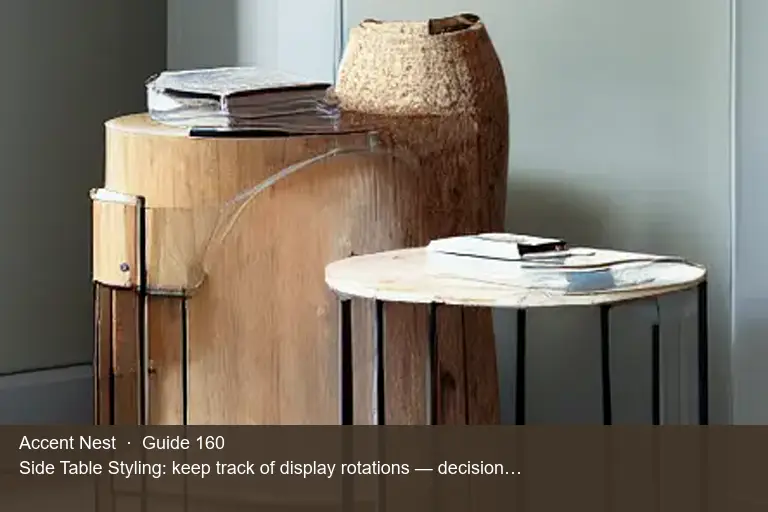
Side Table Styling: keep track of display rotations — decision tree for a household handover; setup in small spaces
**Side Table Styling: Keep Track of Display Rotations — Decision Tree for a Household Handover**
In today's busy world, side tables have become an essential accessory in household storage, with a significant impact on daily routines. However, the choice of which side table to install can be a challenging decision, especially when it comes to maintaining optimal display rotations. This article will guide you through a decision tree to help you make the best choice for your household handover.
**Step 1: Assess the Space**
The first step is to assess the space in which you will be installing the side table. This will determine the size and layout of the space. For example, if you have a small space, you may choose a larger side table to maximize the available space. Conversely, if you have a larger space, you may choose a smaller side table to maximize storage capacity.
**Step 2: Evaluate the Usage**
Next, evaluate the usage of the space. This includes both the current layout and the expected usage. For instance, if you often store items that are not displayed, such as decorative items or office supplies, you may choose a side table that is more accessible. On the other hand, if you frequently display items that are not seen, such as photos or wall art, you may choose a side table that is more practical for displaying items.
**Step 3: Consider the Style and Function**
Consider the style and function of the side table. This includes the type of storage it provides, the color and material it is made of, and the overall aesthetic. For instance, a side table that is made of wood and has a sleek design can be a better choice for a room that values a minimalist aesthetic. Conversely, a side table made of metal and with a more contemporary design may be better for a room that values a modern aesthetic.
**Step 4: Create a Plan**
Based on the assessment, evaluation, and style and function considerations, create a plan for the selection of a side table. This plan should include the type of side table you are choosing, its size and layout, its color and material, its overall style, and its function.
**Step 5: Execute the Plan**
Once you have created the plan, execute the plan. This includes contacting a local furniture store or a side table manufacturer to obtain the necessary information. This will ensure that you receive the right type of side table and its specifications.
**Step 6: Test the Plan**
Finally, test the plan by displaying the selected side table in the room. This will ensure that the side table aligns with the planned display and storage layout, and that it is functional and accessible.
**Conclusion**
In conclusion, side tables are a crucial accessory in household storage, and the choice of which one to install can be a challenging decision. By following a decision tree, you can help you make the best choice for your household handover. Remember, the goal is to create a plan that maximizes the available space, aligns with the intended usage, and fits the style and function of the room. By following this tree, you can help you choose the right side table for your household handover.