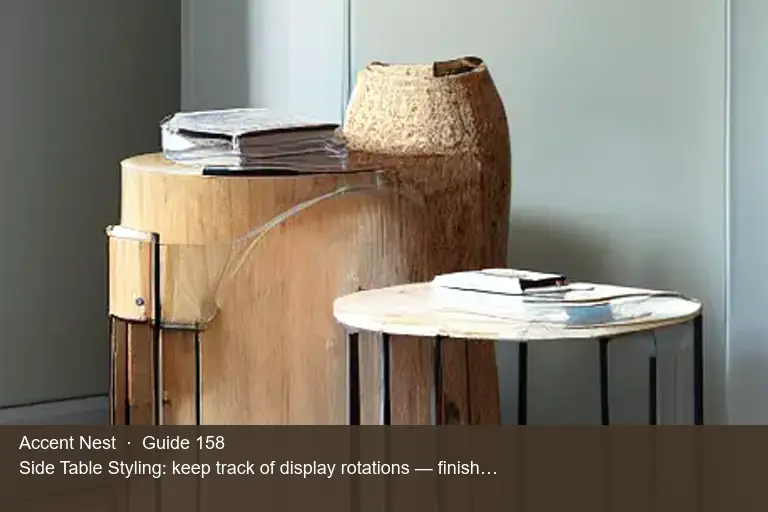
Side Table Styling: keep track of display rotations — finish criteria for a temporary arrangement; setup in small spaces
When arranging side tables in small spaces, it's essential to keep track of display rotations to ensure that your temporary arrangement is not only functional but also aesthetically pleasing. Here are some practical steps to help you maintain your side table decor while keeping things simple and efficient:
- Determine the number of side tables available: Before you start arranging, make sure you have enough side tables in your small space to ensure you have enough space to accommodate your temporary arrangement. This will allow you to set up your sides without worrying about cluttering up your space.
- Use a side table organizer: Consider using a side table organizer that fits inside a small drawer or cabinet. This will allow you to keep your side tables neatly arranged without taking up too much space. It's also easier to organize items like magazines or books that are not always stored on the side tables.
- Arrange the side tables: Once you have your side tables, arrange them in a way that makes sense for your small space. Keep everything in a similar height and proportion, and make sure that each side table is not overcrowded to avoid feeling overwhelmed.
- Use side table dividers: If possible, use side table dividers to separate your side tables. This will make it easier to keep your display organized and not clutter up your small space.
- Use side table accessories: Consider using side table accessories like books or calendars to keep your side tables looking fresh and interesting. This will not only keep your display rotating but also make it easier to organize items like magazines or calendars.
- Set up your side tables: Once you have arranged your side tables, set them up in a way that makes sense for your small space. Make sure that each side table is not overcrowded to avoid feeling overwhelmed.
- Test your temporary arrangement: Before you begin your temporary arrangement, test your arrangement to make sure it looks good and is functional. This will help you identify any issues before you start and ensure that your temporary arrangement is not only functional but also aesthetically pleasing.
By following these steps, you will be able to keep track of display rotations for your side table styling, and your temporary arrangement will be both efficient and aesthetically pleasing.
Use this guide