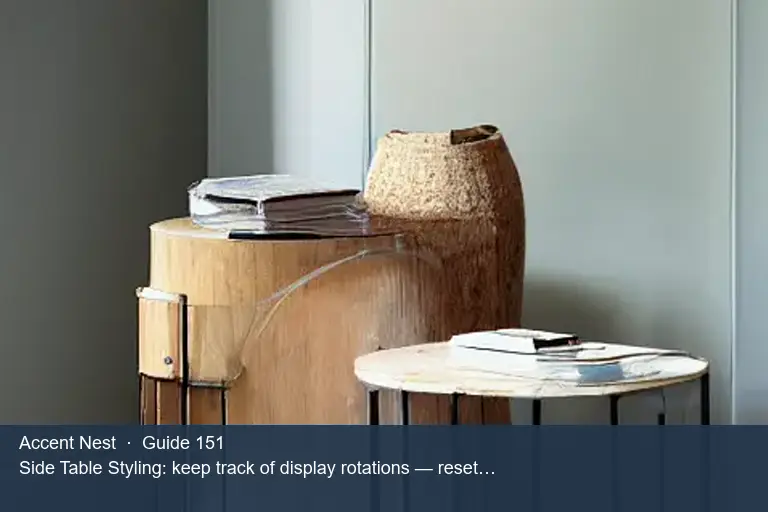
Side Table Styling: keep track of display rotations — reset routine for mixed item sizes; setup in small spaces
Side tables are an essential element of any home decor, but their longevity and the proper management of display rotations can vary by item size. In small-space plans, where space is limited and items are often in a mixed state, the best strategy is to establish a regular routine for rotating side tables. This can help maintain a clean, organized appearance and prevent unnecessary clutter. To achieve this, the first step is to decide on a central location for side tables, such as the kitchen island or a corner area, where they will be easily accessible. Next, establish a rotation schedule for the side tables. This can be done by rotating them every few days, depending on the size of the items, to ensure that the items are always in a manageable size for the user.
Once the rotation schedule is in place, it is important to set the side tables in small spaces. This means placing them in a small corner or a corner of a room where they will not be a distraction from other items. This will not only make the space more aesthetically pleasing, but it will also help to prevent the items from becoming tangled or disordered. To achieve this, the items can be arranged in a way that allows them to be easily rotated, such as by stacking them on top of each other or by using a stackable system. Additionally, it is important to ensure that the items are not too large to be rotated, as this can cause unnecessary clutter or make it difficult to find them.
By following these steps and using the right tools, the side tables can be kept organized and displayed in a small-space plan, making it an attractive and functional addition to any home decor. This can help maintain a clean, organized appearance and prevent unnecessary clutter, making it an ideal choice for a small space plan.