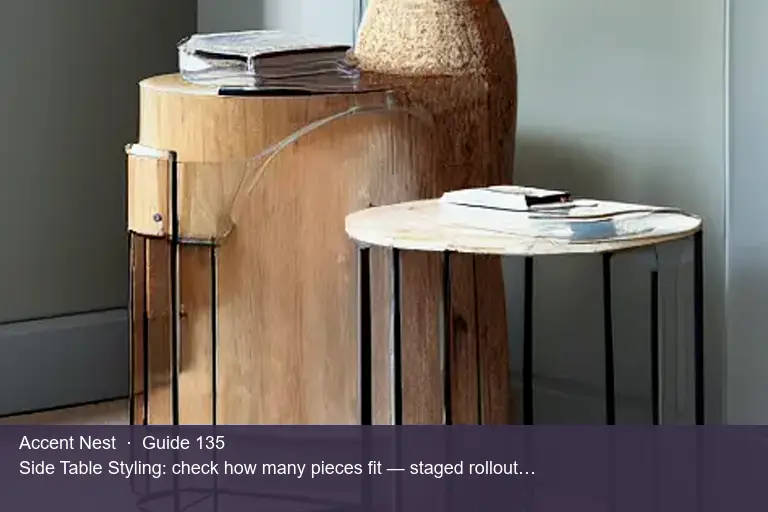
Side Table Styling: check how many pieces fit — staged rollout for a seasonal rotation; setup in small spaces
Side tables have become an essential piece of furniture for any home, and with the right design, they can transform a space into a cozy retreat. However, with so many options to choose from, it can be overwhelming to know how many pieces fit your space. A side table styling check can help you make an informed decision. In this article, we’ll guide you through the process of checking how many pieces fit in a small space, and we’ll also provide tips on how to stage rollouts for a seasonal rotation.
Step 1: Assess the available space
The first step is to assess the available space in your small space. This includes the dimensions and layout of the space, as well as any furniture or decor that is already in place. This will help you determine how much space you have and what pieces you can afford to purchase.
Step 2: Consider the type of side table
Now that you know the available space and the type of side table, the next step is to consider the type of side table. There are many different styles and designs for side tables, so it’s important to choose the right one for your space.
Step 3: Calculate the number of pieces
Once you’ve assessed the available space, the type of side table, and the type of side table, the next step is to calculate the number of pieces that will fit in the available space. This can be done by dividing the available space by the dimensions and the number of pieces in the type of side table.
Step 4: Stage rollouts
The final step is to stage rollouts for a seasonal rotation. This involves arranging the pieces in the available space in a way that will create a cohesive look and feel for the space. This can be done by using a staging table, a wall hanging, or a wall hanging with a backing.
Step 5: Check the results
Before proceeding with the final check, it’s important to check the results. This includes checking the number of pieces in the type of side table, the type of side table, and the type of side table, as well as checking the layout of the available space. If there are any discrepancies, it’s important to make adjustments to the placement or sizing of the pieces to ensure that the space is used efficiently.
Step 6: Apply the results
Finally, it’s important to apply the results to the final check. This includes applying the results to the final check, including checking the number of pieces in the type of side table, the type of side table, and the type of side table, as well as checking the layout of the available space.
Conclusion
In conclusion, a side table styling check can be a useful tool for any home. By assessing the available space, the type of side table, the type of side table, and the type of side table, you can determine how many pieces will fit in the available space. By stage rolling for a seasonal rotation, you can create a cohesive look and feel for the space. By checking the results and applying the results, you can ensure that the space is used efficiently.