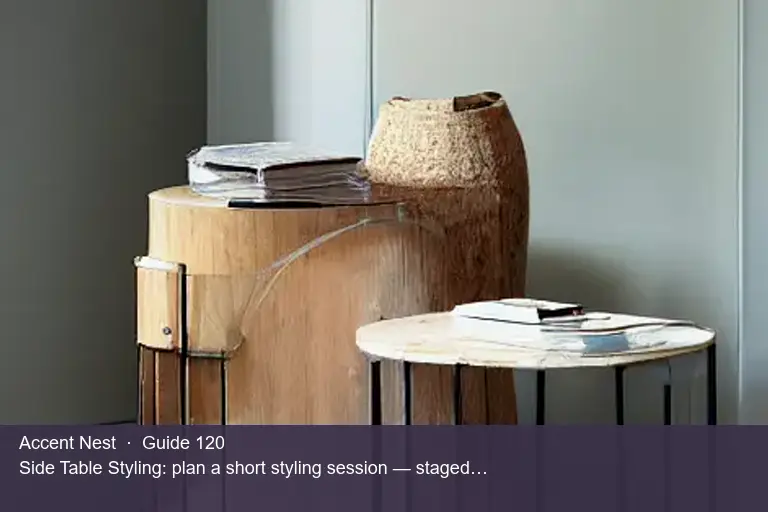
Side Table Styling: plan a short styling session — staged rollout for a household handover; setup in small spaces
**Side Table Styling: A Short Style Session for a Household Handover**
As you step into your next home, you'll likely find yourself in a small space, where the latest trend is often a side table. A side table, also known as a sideboard or side table, is a versatile piece that can serve as a focal point, a storage solution, or a decorative focal point. Whether you're looking to update your living space or just want to give it a fresh look, side tables are a great way to enhance any room. In this article, we'll explore the basics of side table styling, from selecting a suitable piece to creating a cohesive design.
**Understanding Side Tables**
Side tables are typically made from wood and can be either wooden or metal, with different finishes. The wood variety is crucial; it affects the overall look and feel of the piece. Wooden pieces can be found in a variety of colors and textures, while metal pieces are often more modern and sleek. The choice of wood can also have an impact on the storage capacity. A wooden table can hold a lot of books or drawers, while a metal table is better suited for drawers or a more compact storage solution.
**Planning Your Side Table Styling Session**
- **Choose Your Pieces**: Determine the size and style you want for your side table. Depending on your space, a small space might require a simple side table or a larger space, a dining room, a library, or a home office. The pieces you select should be functional and aesthetically pleasing.
- **Select a Color Scheme**: Choose a color scheme that fits your interior design. Whether you prefer neutral tones or a bold color, selecting a color scheme can make a big difference in the look of your side table. Consider the color scheme of your entire living space when selecting the colors for your side table.
- **Design Your Layout**: Decide where you want to place your side table. Depending on your space, a small space might need a simple arrangement, while a larger space might benefit from a more complex layout.
- **Create Your Design**: Once you've chosen your pieces, wood, color, and layout, it's time to create your design. This will involve selecting a wood variety, determining a color scheme, and creating a design that fits your space. Consider your budget and personal style when designing your table.
- **Arrange Your Table**: Arrange your table in a way that fits your space. This could involve using your interior design as a guide, or arranging your pieces in a way that works for your space.
**Staging the Side Table Styling Session**
- **Plan Your Session**: Before you start your session, plan your session. This will involve selecting your pieces, color scheme, layout, and design.
- **Get Your Pieces**: Once you've selected your pieces, it's time to get your pieces. You can find side tables at most home decor stores or online. Once you have your pieces, it's time to arrange them in your design.
- **Arrange Your Table**: Once you've arranged your table, it's time to arrange it in your space.
**Conclusion**
Side tables are a great way to update your living space, and with the right planning, they can become a focal point or a storage solution. By following these steps, you can create a side table that suits your needs and fits your space.
**Note:** As with any style or design, this article is intended to inspire and not to replace professional help or expert advice. If you need help with specific details or ideas, please feel free to ask.