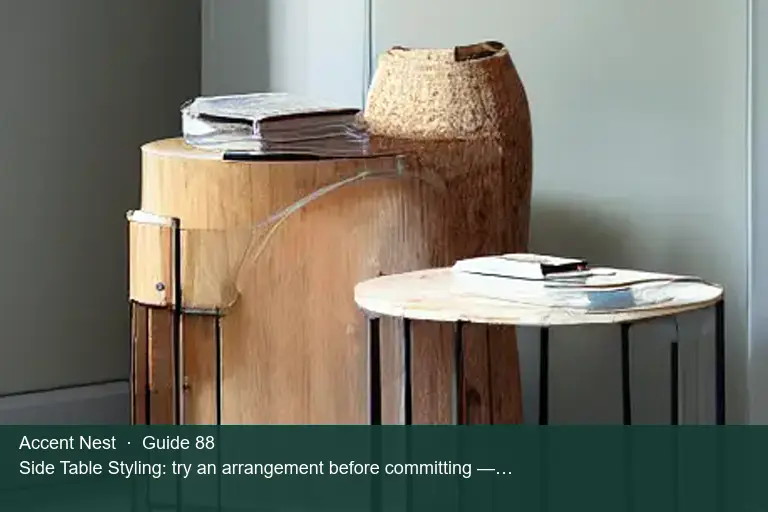
Side Table Styling: try an arrangement before committing — tracking sheet for a short styling session; setup in small spaces
Side tables are essential furniture in any home, from a simple dining table to a cozy bedroom corner. The right choice can enhance the ambiance, display important documents, or act as a storage solution. When choosing a side table, consider the available space, style, and functionality. Here’s how to find the perfect arrangement for your small-space plans.
- **Measure the Space**: Start by measuring the length of your space and the width of your furniture. This will help you determine how many sides you can fit within the available space without overcrowding. For example, a 5-foot tall person can comfortably fit 10 sides in a 10-foot space.
- **Choose a Size**: Measure the length and width of your furniture to determine the appropriate side table size. For example, a 4-foot tall dining table can fit 20 sides, while a 6-foot tall coffee table can fit 12 sides.
- **Consider the Style**: Choose a side table that matches the theme of your home. For instance, a minimalist style might prefer a simple design with no decorative elements. A more traditional style might prefer a more ornate design with additional details.
- **Select the Right Type of Side Table**: Side tables come in various sizes and styles. Look at the style, color, and materials of your furniture to select the appropriate side table type. For example, a tall dining table might prefer a tall side table, while a short coffee table might prefer a round side table.
- **Arrange the Furniture**: Once you’ve chosen the right side table, arrange the furniture in the desired space. For example, place the dining table in the corner, the coffee table in the middle, and the side tables in the middle.
- **Test the Arrangement**: Once you’ve arranged the furniture, test the arrangement by moving the furniture and checking if it fits within the available space. If it does, move the furniture around until it doesn’t fit. If it doesn’t, move the furniture to the next available space.
- **Adjust and Refine**: Refine the arrangement until you find the perfect fit. This can involve adjusting the furniture placement, changing the size of the side table, or adjusting the style of the side table.
- **Final Touches**: Once you’ve found the perfect arrangement, make final touches and add the necessary accessories. For example, a side table with a mirror or a decorative border can enhance the ambiance.
**Final Notes:**
- Always start with a clear idea of the space, then choose a size, type, and style that suits the theme and your budget. - Measure the space and furniture to ensure you have enough room. - Choose a style that matches your home’s theme. - Select a side table that fits within the available space. - Arrange the furniture in the desired space. - Test the arrangement by moving the furniture and checking if it fits within the available space. - Adjust and refine the arrangement until you find the perfect fit.
**Storing the Side Tables**: Once you’ve arranged the furniture, store the side tables in a convenient location. For example, keep them in a side table drawer or under a desk. This will keep them out of sight and out of the way, making them easy to access.
**Conclusion**: Choosing a side table for your small-space plans is an easy task. By measuring the space, choosing a size, type, and style, and arranging the furniture, you can find the perfect arrangement that suits your needs and your style.