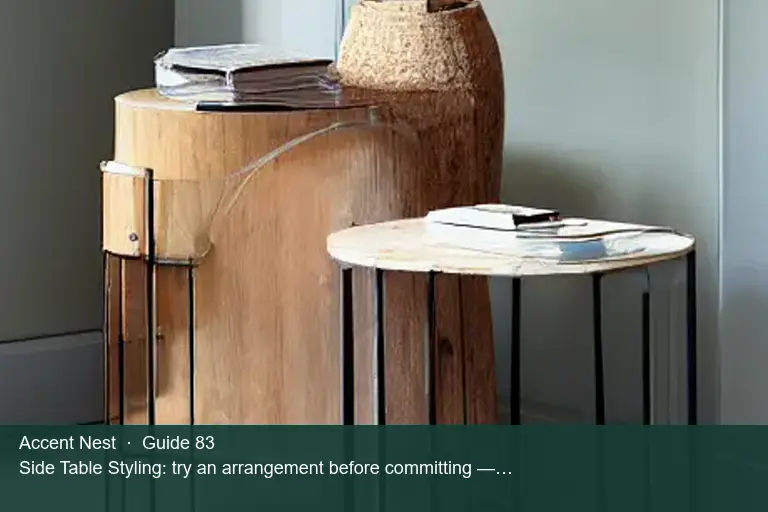
Side Table Styling: try an arrangement before committing — priority ranking for a narrow display area; setup in small spaces
Side tables are essential furniture in any home, offering versatile storage solutions and a cozy ambiance. However, choosing the right type and arrangement can be a daunting task. In this article, we'll explore the practical aspects of side table styling for those in the 50+ age group in the US and Canada. We'll focus on narrow display areas and the importance of a layout before committing. By the end of this article, you'll understand the key elements to consider when selecting a side table for your unique space needs.
First, let's consider the importance of a narrow display area. Small spaces are the norm, and side tables are designed to fit into small spaces. The key is to choose the right type of side table and arrange it to maximize the display area. A narrow display area can be a challenge, but with the right arrangement, it can be a delight. When selecting a side table, it's important to consider the type of furniture and the space it will fit into. For instance, a side table with a slim, round shape is ideal for a narrow display area, as it provides a more balanced look.
Now, let's look at the importance of a layout before committing. A layout is the visual design of the side table, and it should reflect the overall style and theme of your space. The layout should be clear, easy to navigate, and visually appealing. It's important to consider the functional needs of your space. For instance, a side table with a height adjustment should be designed to accommodate the height of your furniture. For example, if you have a sofa, a height adjustable side table could be ideal, as it allows you to adjust the height of your sofa without sacrificing the display area.
Lastly, let's consider the importance of the color of the side table. The color of the side table is an important element to consider, as it can affect the overall look and feel of the space. For instance, a side table with a dark color can create a sense of depth and weight, while a side table with a light color can create a sense of lightness and warmth. It's important to consider the lighting in your space, as it can affect the overall ambiance and mood of the space. For instance, if your room has a dim lighting, a side table with a dark color may be ideal, as it creates a sense of depth and weight.
In conclusion, when selecting a side table for your unique space needs, it's essential to consider the importance of a narrow display area, the importance of a layout, and the importance of the color of the side table. By the end of this article, you'll have a clear understanding of the key elements to consider when selecting a side table for your unique space needs.