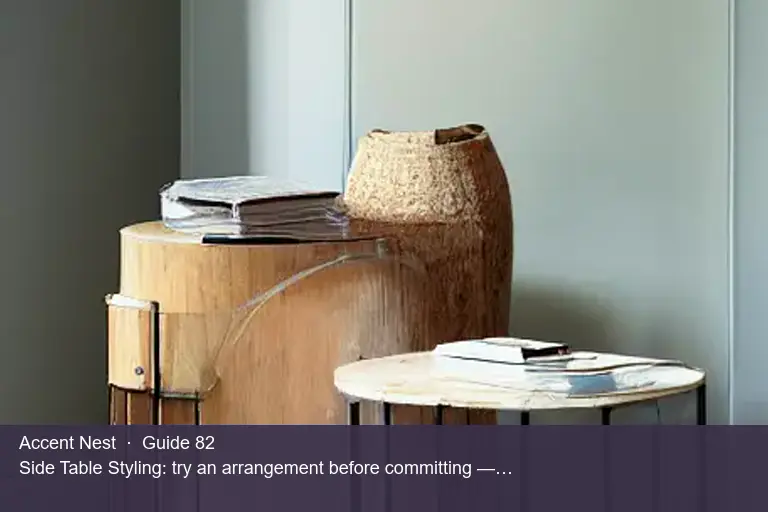
Side Table Styling: try an arrangement before committing — change log for a first display plan; setup in small spaces
Side tables are a staple of any living space, offering both practical functionality and aesthetic appeal. When deciding on a side table to display, it's crucial to consider both the size and the intended usage. This article will guide you through the process of selecting and arranging a side table, ensuring a practical and stylish display for small spaces.
First, let's consider the primary size of your side table. Depending on the size of your living space, a side table can be small, medium, or large. Consider the room's layout and the furniture you have in place. For a small-space layout, a medium-sized side table can be sufficient, while a large one might be more appropriate for a larger space. It's important to note that the size of your side table should match or exceed the furniture you plan to display.
When selecting your side table, consider the purpose of the display. Is it for a desk, a table, a dining room, or a living room? Each purpose requires different types of side tables. A desk side table is typically flat and simple, suitable for displaying items like books, a desk, or a coffee table. A table side table is more versatile, offering a variety of options like a dining room table, a sofa table, or a coffee table.
Once you've selected your side table, it's important to consider its shape and style. Consider the furniture you have in place, as well as any other pieces you want to display. For a small space, a rectangular or square side table can be effective, while a round or oval side table can add a pop of color or texture. A simple, neutral color, like white or beige, can help you create a visually appealing display.
When arranging your side table, consider the placement of the items you want to display. Consider the size and the height of the items you want to display. For example, a bookshelf can be arranged in a vertical arrangement, with each shelf facing a different wall. Alternatively, a flat side table can be arranged in a horizontal arrangement, with each shelf facing a different wall.
Lastly, don't forget about the lighting. A side table can be a focal point for a living space, so ensure that the lighting is adequate to illuminate the items you want to display. Consider the color and the lighting of the room you are in, as well as the color of the room you are in.
In summary, when selecting and arranging a side table for your small-space, consider the size and purpose of the display, the shape and style of the table, the placement of items, and the lighting. A practical and stylish display can make a big impact on your living space.
Try an arrangement before committing: A small-space display plan can be a great way to showcase your space and create a visual impact. Start with a small table and add items to it. Consider the size of the table and the purpose of the display. Use your imagination to create a layout that matches your vision, and don't be afraid to make changes. By starting with a small space, you can create a display plan that is both practical and aesthetically pleasing.