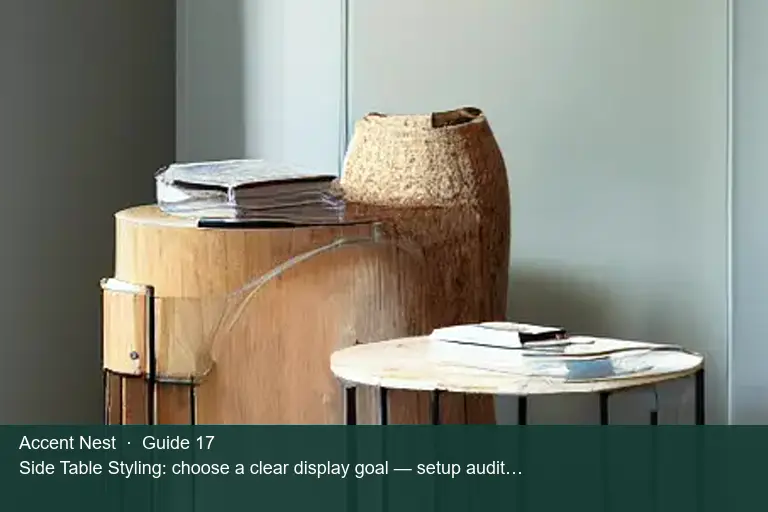
Side Table Styling: choose a clear display goal — setup audit for a temporary arrangement; setup in small spaces
Side tables are versatile pieces of furniture that can be used for various purposes, such as storage, seating, or even as a focal point in a small space. When selecting a side table for a temporary arrangement, it is crucial to consider the purpose and the available space. For a small space plan, a simple, functional side table can serve multiple purposes. Here are three practical steps to help you choose a clear display goal for your side table.
- Assess the purpose: Consider the most common use for the side table. Is it for storage, seating, or even as a focal point? For a small space plan, a simple storage side table can be ideal. This table will be small in size, allowing you to store a variety of items in a compact space. For seating, a small side table can be used for a single person or a couple. For a focal point, a small side table can be a small dining table, a small seating arrangement, or a small desk.
- Consider the available space: Measure your available space and choose a size that fits comfortably in the small space. For example, if you have a small living room, a small side table that is 12 inches in width and 10 inches in depth can be ideal. This table will be small enough to fit in the small space, yet large enough to accommodate your needs and desires.
- Choose a simple design: Select a simple design for your side table that is easy to clean and maintain. A simple design can include a clean, polished finish, a minimalistic shape, and a simple, versatile seating arrangement. For example, a simple, single-person seating arrangement can be a great option for a small space plan. A simple design can also include a small, adjustable height, a simple, versatile storage, and a simple, durable finish.
In conclusion, when selecting a side table for a temporary arrangement, it is essential to consider the purpose and the available space. For a small space plan, a simple, functional side table can serve multiple purposes, such as storage, seating, or even as a focal point. By assessing the purpose, measuring the available space, and choosing a simple design, you can create a clear display goal for your side table.