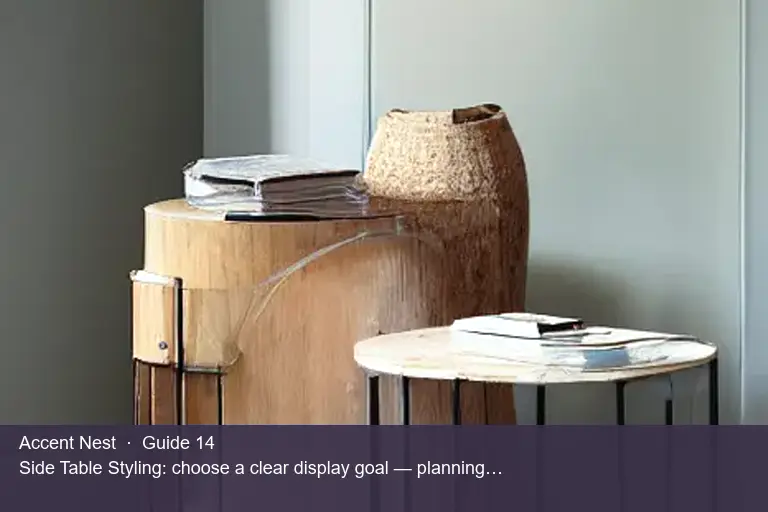
Side Table Styling: choose a clear display goal — planning worksheet for incomplete measurements; setup in small spaces
Side tables are a staple of many homes, offering not only storage but also a touch of elegance and modernity. But selecting the right type of side table is as important as choosing the right flooring or furniture to complete a small space. This practical task will guide you through the process of choosing a clear display goal for side tables, using incomplete measurements to set up in small spaces.
### Step 1: Assess Your Space and Needs
Before diving into the practical task, it's essential to understand your space and what you need from the side table. Begin by describing your room in detail, noting the size, shape, layout, and the number of people you have in your space. Consider the type of items you want to store, the number of drawers, the number of shelves, and any other features you want in the room. This step is crucial because it will help you determine the size and placement of your side table.
### Step 2: Collect Measurements and Measurements
Once you have a clear idea of your space, collect the measurements of your side table. This will be important because it will help you understand how much space your side table will take up. Include the measurements of your side table, including its height, width, and depth. This step is crucial because it will help you plan the placement of your side table in small spaces.
### Step 3: Set Up Your Side Table
Now that you have the measurements of your side table, you can set it up in small spaces. Start by measuring the length and width of your room. This will help you determine the placement of your side table. Measure the height of your room. This will help you determine the placement of your side table in small spaces.
### Step 4: Select a Side Table
Select a side table that complements your room's style and the items you want to store. This step is crucial because it will help you choose the right type of side table for your space. Consider the type of items you want to store, the number of drawers, the number of shelves, and any other features you want in your space.
### Step 5: Arrange and Position
Arrange and position your side table in your space, ensuring it takes up the necessary space. Arrange the items you want to store in a logical and functional manner. Position the side table in a way that allows you to easily access the items you want to store. This step is crucial because it will help you ensure that your side table complements your room's style and the items you want to store.
### Step 6: Final Touches
Once you have set up your side table, you can add finishing touches such as lighting, borders, and decorative elements to your space. Add lighting to highlight the items you want to store. Add borders to the side table to separate it from the rest of your space. Add decorative elements such as plants or artwork to add personality and interest to your space.
### Step 7: Conclusion
Congratulations! You have completed the practical task of choosing a clear display goal for side tables. You now know how to set up your side table in small spaces using incomplete measurements. Remember, this process will help you create a functional and stylish space that complements your room's style.