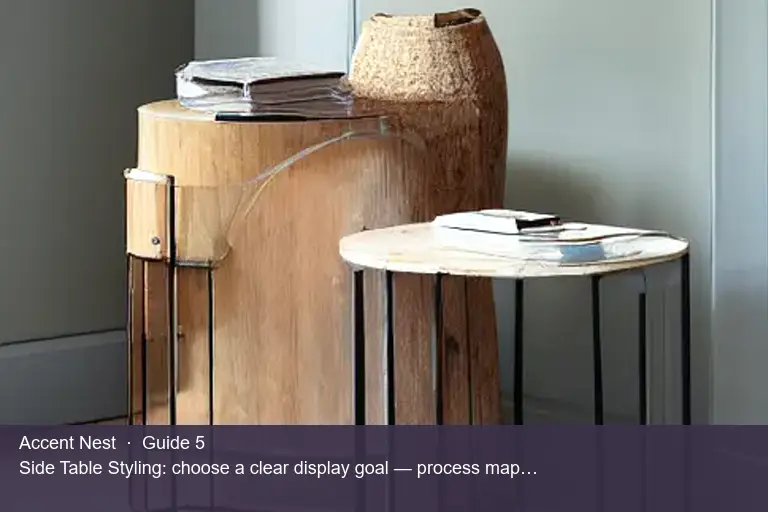
Side Table Styling: choose a clear display goal — process map for a shared room; setup in small spaces
Side tables are a versatile piece of furniture that can transform a small space into a functional and inviting area. The key to selecting a clear display goal for side tables is to consider your space, which in this case is a shared room. A shared room typically includes a living room, dining room, or entertainment room, all of which can benefit from side tables. The goal should be clear and concise, allowing you to easily determine the most suitable table for your needs.
To start, ask yourself, "What is the primary purpose of the space? What are the daily activities and events that take place here?" This will help you decide on a side table that is suitable for both work and play. For example, if the shared room is used for family gatherings or casual dinners, a dining table or a small coffee table would be the most appropriate. If the shared room is used for entertainment or play, a small table or a gaming table might be better suited.
Next, consider the types of people who will be using the space. For example, a family with children might prefer a small table with a child's crib or a play area. A family with older children might prefer a larger table or a dining table with seating for adults. A family with pets might prefer a table with an area for pets or a small table with a bench for pets.
Once you've identified the purpose and types of people, it's time to consider the space available. A shared room typically has limited space, so a small table or a table with ample seating might be the better option. For example, if the shared room has a small kitchen area, a small table with ample seating might be suitable for cooking and meal preparation.
After these considerations, it's time to plan out the space. Create a process map that includes the types of people and the available space. For example, a process map might include:
- People: children, adults, pets
- Space: small, large, dining, entertainment
This will help you determine the best size and type of side table for each type of people and type of space. For example, a small dining area might require a small table or a small coffee table with ample seating, while an entertainment room might require a large table with seating for adults or a small table with a bench for pets.
Finally, it's time to choose your side table. Once you've determined the purpose and types of people, the available space, and the type of space, it's time to choose your side table. This may involve trial and error, as you might need to experiment with different sizes, shapes, and materials until you find the best fit for your needs.
In summary, selecting a clear display goal for side tables involves considering the purpose of the space, the types of people who will be using it, the available space, the type of space, and the process map. The process map can help you determine the best size and type of side table for each type of people and type of space. The final step is to choose your side table, which may involve trial and error until you find the best fit for your needs.