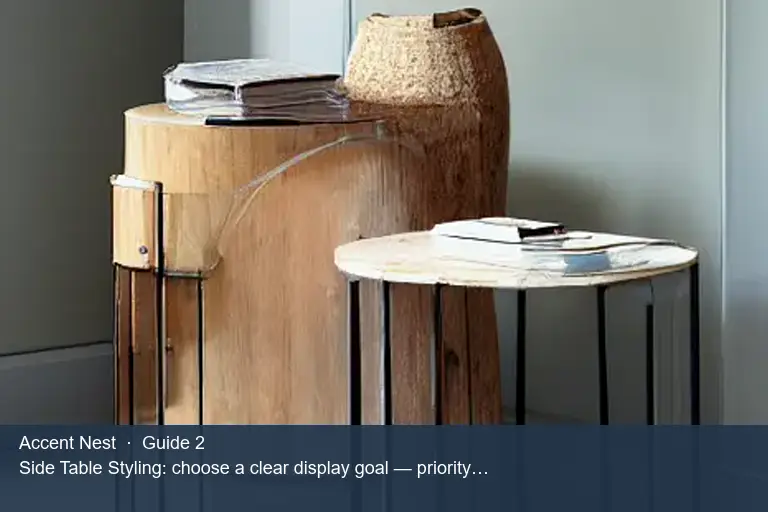
Side Table Styling: choose a clear display goal — priority ranking for a first display plan; setup in small spaces
In today’s world, side tables have become an essential element in any home decor scheme, serving as a functional and visually appealing accessory. From the initial design choices to the final installation, side table styling plays a pivotal role in creating a cohesive and stylish display plan. This article aims to help you, the reader, choose a clear display goal for side table styling. For a first display plan, a clear display goal should be prioritized to ensure the side table is placed in a small space. The following steps will guide you in selecting a suitable side table for your small space.
First, select a side table that is versatile enough to fit into any small space. Side tables can be found in various materials such as wood, metal, or plastic. The choice should be based on the space’s size and the materials available at your disposal. For a small space, consider selecting a table with a compact design, ensuring it can be easily moved into a small room. This will make the side table easier to handle and move around.
Next, decide on a size that is suitable for the small space. Small spaces often have limited space to work with, so it is essential to choose a table size that allows for easy movement and storage. A table size of 4 feet is ideal for a small space, as it provides ample space for a few items and is relatively easy to maneuver. Ensure the table is large enough to accommodate all items in your small space without causing clutter.
After selecting a table, choose a mounting method that is compatible with the small space. Small spaces often have limited room for mounting, so it is crucial to choose a mounting method that does not restrict the table’s movement. A table mount that is suitable for small spaces can be found in various materials such as wood, metal, or plastic. Choose a mounting method that is easy to remove and move around, such as a metal or plastic mount, ensuring it can be easily adjusted to your specific needs.
Lastly, choose a material that is compatible with the small space. Small spaces often have limited space for materials, so it is essential to choose a material that does not restrict the table’s movement. A material that is compatible with the small space should be chosen, such as wood, metal, or plastic. Ensure the material is sturdy enough to withstand the pressure of a small space, while still allowing for easy movement and storage.
By following these steps, you can select a clear display goal for side table styling for a first display plan in a small space. Remember, the first display plan is not just about choosing a side table, but also about the placement of the side table in the space. A clear display goal helps ensure the side table is placed in a small space, making it easier to manage and move around.