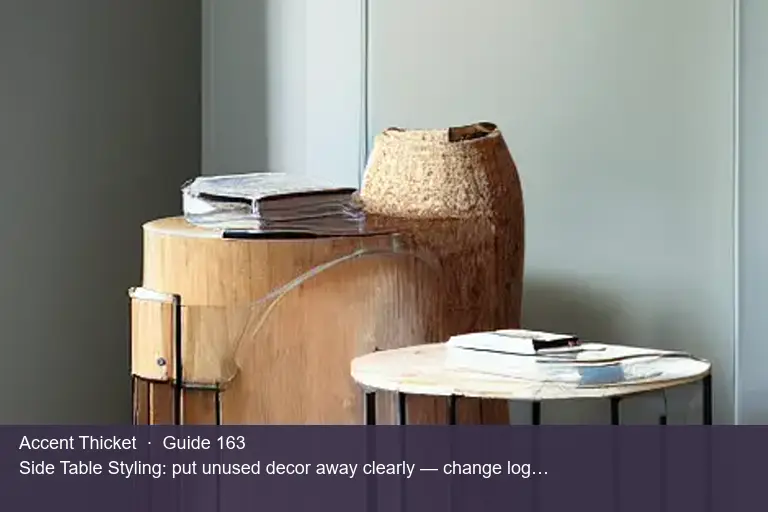
Side Table Styling: put unused decor away clearly — change log for a narrow display area; setup after a break
---
**Side Table Styling: Put Unused Decor Away Clearly — Change Log for a Narrow Display Area**
**Situation: A Narrow Display Area**
The day had just begun, and the room was already buzzing with the sounds of children playing and adults chatting. The narrow display area was a little messy, with the table and legs cluttered with a few old pieces of furniture and a few unused pieces of decor. The floor was a mess, with the table and legs covered in a thick layer of dust. The room felt like a constant struggle to find the right balance between aesthetics and functionality.
The team had a busy day, but they were determined to make the space look new and functional. The challenge was to find a way to clean up the clutter, while also maintaining the aesthetic of the room. The solution was a simple change log, designed to help them achieve this goal in the most efficient manner possible.
**Setup After a Break**
As the sun began to set, the team gathered at the dining room table to start their task. The area was already cluttered with the remnants of the day, and they were determined to clean it up. The first step was to clean the table and legs. They used a combination of vacuuming and dusting to remove the dust, and then they used a soft cloth to remove any remaining bits of furniture.
Next, they focused on the remaining unused pieces of decor. The team decided to start with the most common pieces, such as a vase or a piece of fabric. They used a brush and a clean cloth to remove the bits of fabric and to clean the vase.
As they worked, they noticed that the remaining unused pieces of decor were scattered across the floor. They decided to move them to a more usable location, such as the corner of the table or the side of the table. They used a clean cloth to remove the bits of furniture and to clean the remaining unused decor.
**A Change Log for a Narrow Display Area**
As they cleaned the room, the team wrote a change log. The log was a simple list of actions taken to clean the room, with each action numbered and a short description of what was done. For example, they wrote: "Vacuumed and dusted the table and legs, and removed all remaining furniture."
The team also wrote a note about the remaining unused decor, which they moved to a more usable location. The log was a useful stopping point, as it helped them maintain a clear and organized workspace while also ensuring that the room remained fresh and functional.
**Conclusion**
The team had successfully cleaned the room while maintaining the aesthetic of the room. They had made the most of their break time to achieve their goal. The room was now fresh and functional, and the team felt proud of their efforts.
The next time the team returned to the room, they would be well on their way to achieving the same results. The team had learned a valuable lesson in the process of organizing and managing clutter, and they were determined to apply it to other areas of their lives.