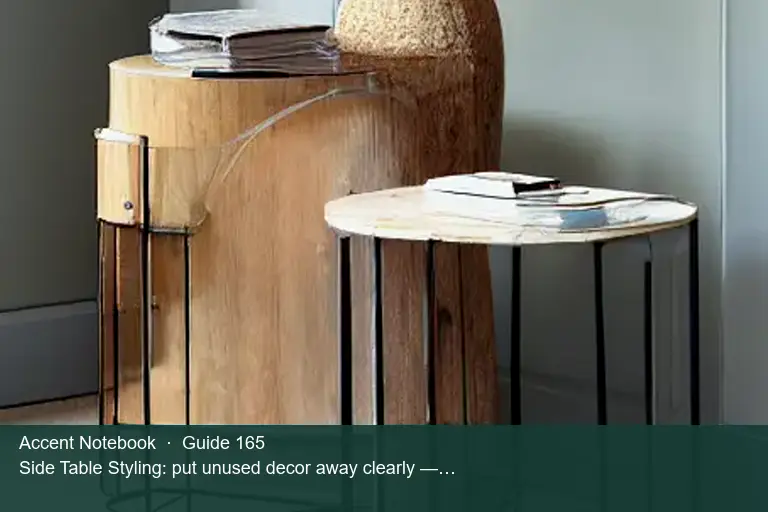
Side Table Styling: put unused decor away clearly — consistency test for a shared room; setup with paper records
In a shared room, side tables become a focal point for conversation and gathering, but they can also become a point of disarray and clutter. One solution to this problem is to organize side tables with clear purpose and a consistent look. The key is to establish a system for keeping side tables organized so that they are available when needed and not cluttered when not needed.
To start, consider the following practical task: side table styling: put unused decor away clearly — consistency test for a shared room; setup with paper records. A shared room typically includes common areas such as the dining room, living room, and bedrooms. Side tables often overlook the living spaces, making them a source of potential clutter.
- **Select side tables**: Choose side tables that are functional and do not clutter. Side tables should be sturdy enough to hold a few items, but not so heavy that they become a distraction.
- **Organize side tables**: Arrange side tables in a way that maximizes their utility while minimizing clutter. This could involve arranging them in a way that maximizes usable space and minimizes redundant items.
- **Use paper records**: Paper records are a great tool for organizing side tables. They provide a clear record of items, making it easy to find what you need when you need it. This can be particularly useful in shared rooms where side tables can be shared by multiple people.
- **Consistency**: Consistency is key when setting up side tables. This involves keeping the layout and arrangement consistent throughout the shared room. A consistent system can help ensure that side tables are available when needed and not cluttered when not needed.
- **Testing consistency**: Once you have organized side tables, it is important to test their consistency. Check if side tables are still available when they should be or if they are still cluttered when they should not be.
- **Implementing the system**: Once the system is in place, implement the system. This involves setting up the side tables in a way that is consistent with your needs and the shared room's layout.
- **Regular maintenance**: Regularly maintain the system to ensure that it remains in place and effective. This could involve cleaning and organizing the system to ensure it remains functional and clear.
In conclusion, side tables can become a source of clutter and disarray, but they can also be used to organize and keep your shared room tidy. By organizing side tables with clear purpose and a consistent look, you can reduce clutter and keep your shared room organized and functional.