Side Table Styling: keep track of display rotations — handover notes for a first display plan; setup with paper records
Side tables are essential pieces of furniture in any home, but their design and aesthetics can vary greatly depending on the style and size of the room. By understanding the different styles and their associated side table styles, you can help your team maintain a consistent look and feel throughout the project. Whether you are looking to create a sleek, modern or a more classic, traditional-style side table, here are some key considerations to keep in mind:
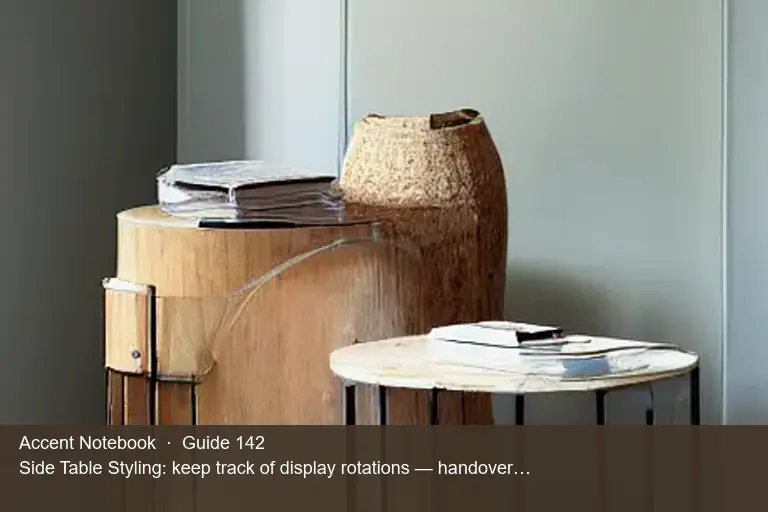
- Modern Side Tables: Modern side tables typically have sleek, minimalist designs with straight lines and clean lines. They are often used in contemporary rooms to create a modern, minimalist feel. For this style, consider using a single, large piece of wood or a smaller, more complex piece of wood with a round top. Side tables with a round top, such as a coffee table or a sideboard, are ideal for a modern, minimalist style.
- Traditional Side Tables: Traditional side tables are more traditional in style and typically have a more rounded design, with a slightly larger opening and a more traditional top. They are often used in traditional rooms to create a more traditional, timeless feel. For this style, consider using a larger, more complex piece of wood with a round top or a larger, more complex piece of wood with a round top and a larger opening. Traditional side tables with a round top, such as a coffee table or a sideboard, are ideal for a traditional, timeless style.
- Modern Side Tables: Modern side tables are typically light and airy, with a minimalistic design and a straight line. They are often used in modern rooms to create a modern, minimalist feel.
4.
When handover notes are provided for a first display plan, the team can ensure that each side table is properly placed and set up with a clear handover. This includes the handover of the side table layout, including the size, shape, and color of the wood. A handover record should also include the side table number and the date of handover. This ensures that everyone involved in the project has a clear understanding of the details of the side tables and how they will be displayed.
In conclusion, side tables are essential pieces of furniture that can be designed in many different styles. Understanding the different styles and their associated side table styles can help your team maintain a consistent look and feel throughout the project. By providing handover notes for a first display plan, you can ensure that each side table is properly placed and set up with a clear handover.