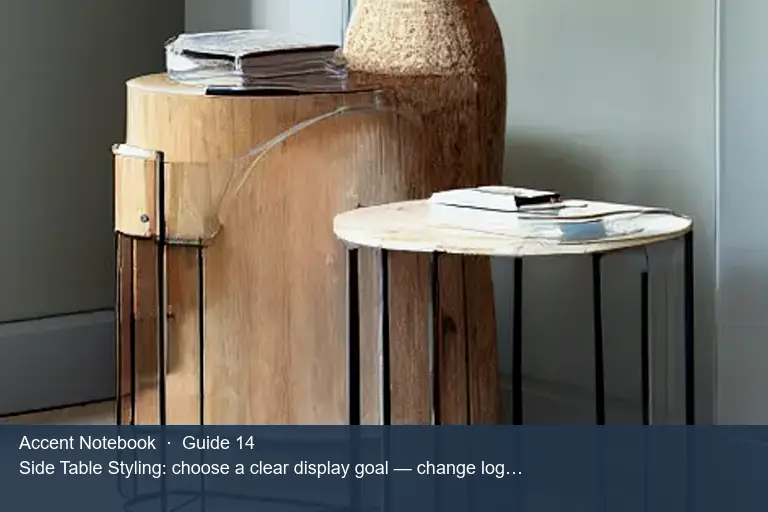
Side Table Styling: choose a clear display goal — change log for incomplete measurements; setup with paper records
**Side Table Styling: A Guide for Complete and Incomplete Measurements**
Side tables, often found in kitchens, dining rooms, or small spaces, serve as the first point of view when you're ready to present your dining and entertaining needs. This article provides a clear display goal for side tables, focusing on the first step: choosing a clear display goal for side tables.
### Choose a Clear Display Goal for Side Tables
When selecting side tables, it's important to focus on the first step: choosing a clear display goal. This is crucial as it sets the tone for the entire project and ensures that the side table's aesthetics and functionality are aligned with your overall design goals. The goal should be clear and specific, allowing you to prioritize the elements that will dominate your space.
#### The First Step: Choose a Clear Display Goal
The first step in selecting a side table is to choose a clear display goal. This goal should be clear and specific, allowing you to prioritize the elements that will dominate your space.
#### The Second Step: Measure the Space
Before you can choose a clear display goal, you need to measure the space. Measure the space thoroughly, including the width and depth of the space to ensure you cover all the necessary areas. This will help you identify the elements that are essential and not just a waste of space.
#### The Third Step: Set a Clear Display Goal
Once you have measured the space, set a clear display goal. The goal should be specific, meaning it should be clear, measurable, and actionable. For example, "clear display goal: create a large, open space for dining" or "clear display goal: create a space with a clear, visible centerpiece."
#### The Fourth Step: Record Your Goals
After setting your clear display goal, it's important to record your goals. This will help you stay on track and ensure that you're focused on the right elements. Keep a record of your goals, including the measurements, the space you measured, and the specific elements you identified as essential.
#### The Fifth Step: Apply Your Goals
Once you have your clear display goal and recorded your goals, apply your goal to your project. This means taking the measurements, measuring your space, and applying your goal to the space. This will ensure that you have a clear, organized plan for your side table.
#### The Sixth Step: Review and Adjust
After applying your goal, review your progress and adjust as necessary. Measure again, measure the space again, and apply your goal again. This will ensure that you're always on track and making progress towards your goal.
#### The Seventh Step: Document Your Progress
Document your progress in a clear, organized way. Keep a record of your measurements, measurements of the space, and your specific elements. This will allow you to track your progress and make adjustments as necessary.
### Conclusion
In summary, when selecting a side table, it's crucial to focus on the first step: choosing a clear display goal. By following these steps, you can ensure that your side table's aesthetics and functionality are aligned with your overall design goals.