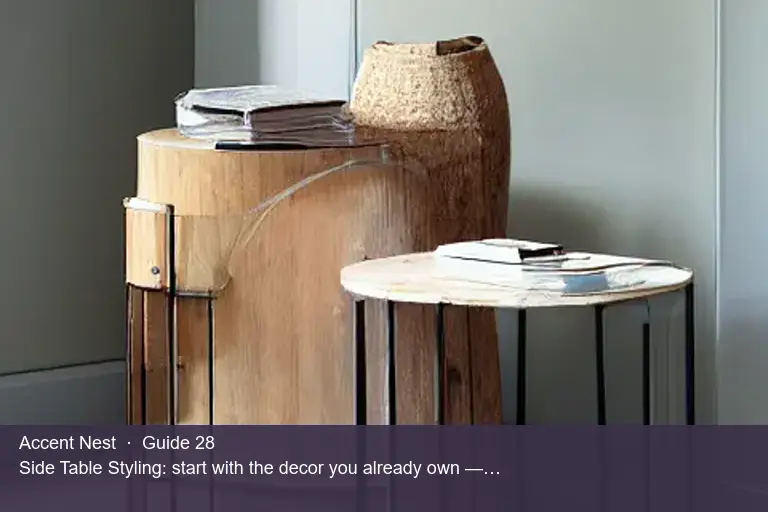
Side Table Styling: start with the decor you already own — decision tree for a short styling session; setup in small spaces
One of the most essential components of a side table is the choice of materials and finishes. When selecting a side table, it's essential to consider the decor you already own, as this will greatly influence the aesthetic and functionality of your new piece. Here’s a step-by-step guide to help you start your side table styling session with the decor you already own:
- **Initial Selection of Materials**:
- **Colors**: Choose a color scheme that complements your existing decor. For instance, if you have a neutral color palette, opt for a color that contrasts well with your existing decor. For example, if you have a white table, choose a gray or beige color for the backrest. - **Stains and Resin**: Decide on the type of stain (e.g., clear, matte, oil-based) and the type of resin (e.g., polyurethane, acrylic). Each option has its own benefits and drawbacks, so choose wisely based on your budget and desired results.
- **Choosing Finishes**:
- **Metal**: For a sleek look, metallic finishes like stainless steel or aluminum could be ideal. However, avoid using them in a space where they might interfere with the table's function or the furniture's style. - **Wood**: For a more natural look, choose wooden finishes like teak, mahogany, or cedar. These woods are durable and can be easily polished or stained.
- **Designing Your Side Table**:
- **Shape and Size**: The shape of your side table can vary, but a standard rectangular or square shape is ideal for a more straightforward design. Ensure it is large enough to accommodate the table and its accessories. - **Color**: Consider the overall color scheme and the table's design to ensure it complements your existing decor.
- **Final Touches**:
- **Polishing**: Once you have chosen your materials and finishes, you can start polishing your side table. This can be done using a professional polishing kit or by using a natural oil and sanding. - **Finishing**: After polishing, you can apply a coat of stain or paint to finish your side table. Always consult with a professional if you plan to stain or paint.
Remember, the key to a successful side table is to start with the decor you already own. This way, you can ensure that the new piece is both functional and aesthetically pleasing.
Use this guide