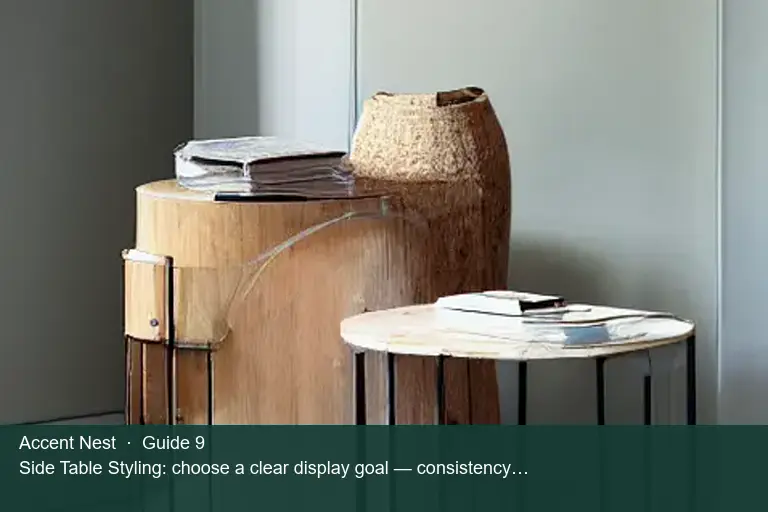
Side Table Styling: choose a clear display goal — consistency test for existing decor; setup in small spaces
Side tables are a staple in any home decor scheme, but what's the clear display goal for side tables when you're working with existing decor? If you're looking to create a cohesive and functional display for your side tables, one effective approach is to start with a clear display goal that aligns with your existing decor. In small spaces, a clear display goal can help you create a cohesive and functional display that not only makes your space visually appealing but also serves practical needs.
One effective strategy to achieve this is to choose a clear display goal that aligns with your existing decor. For instance, if you have a cluttered and disorganized living room, you might want to focus on creating a clear display goal that focuses on organizing and displaying your furniture. This could mean setting aside specific areas for side tables or choosing a display plan that aligns with your existing decor.
To begin, you can consider the following steps:
- Assess your existing decor: Start by taking a moment to reflect on your current decor. Think about the furniture you have, the items you regularly use, and the style of your home decor. This will give you a clear understanding of what you have available and what you might need to change.
- Prioritize your needs: Once you have a clear understanding of your existing decor and the items you have available, you can start prioritizing your needs. Consider what items you need frequently and what items you can use in specific areas. This will help you create a clear display goal that aligns with your needs.
- Choose a display plan: Once you have prioritized your needs, you can start to create a display plan that aligns with your existing decor. This display plan can be based on your existing decor, but it can also be based on your preferences, such as the color scheme, the style of the furniture, or the items you regularly use.
- Create a display plan: To create a display plan, you can start by brainstorming ideas. Think about what items you want to display in each area of your living room or bedroom. Consider what items you might use frequently and what items you can use in specific areas. Once you have a clear idea of what you want to display, you can create a display plan.
- Test your display plan: Once you have created your display plan, it's important to test it to make sure it works well with your existing decor. This could mean testing your display plan in small spaces, or with different types of furniture or styles. This will help you make sure your display plan is effective and aligns with your existing decor.
By starting with a clear display goal, you can create a display plan that aligns with your existing decor and helps you create a functional and visually appealing display for your side tables.